Understanding Supplier Pricing for 95999028383 Components
This guide explains how to evaluate supplier pricing and sourcing quality for components associated with “95999028383.” Objectively, it reviews how reference numbers, lead times, compliance, and warranty terms shape real-world purchasing decisions—helping you compare quotes without relying on marketing language or assumptions about value.
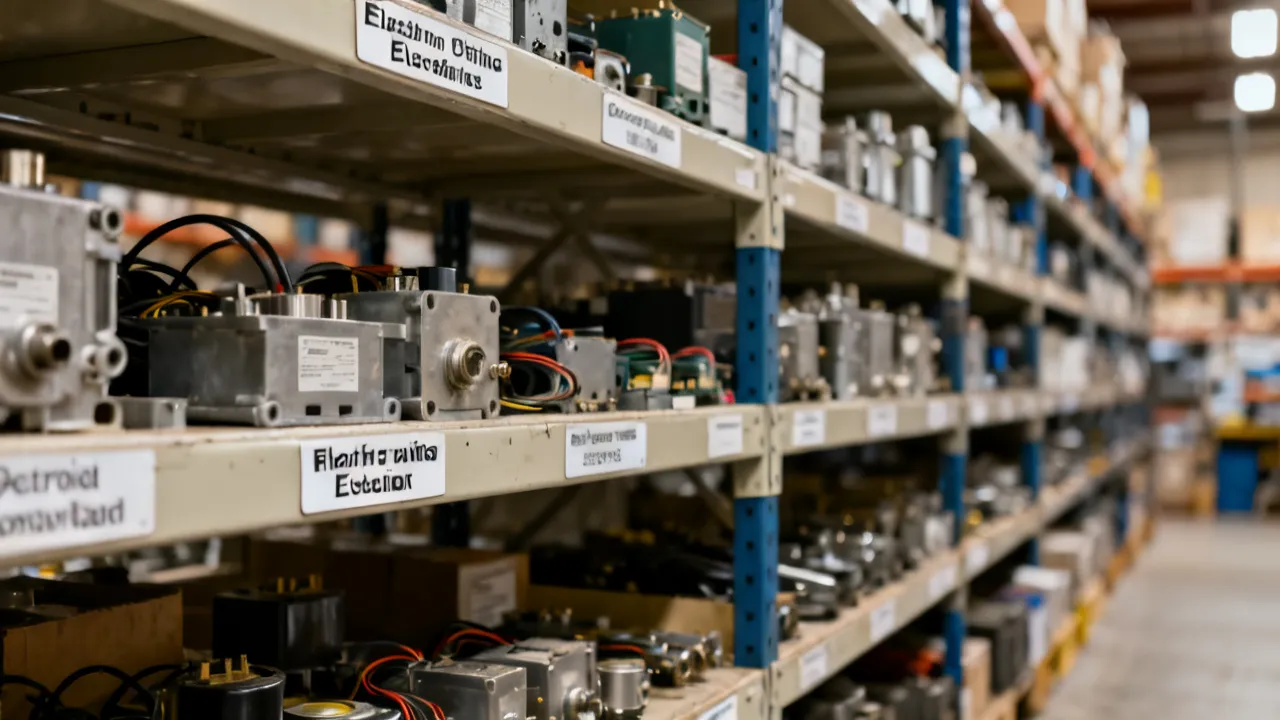
Why supplier pricing linked to “95999028383” must be assessed carefully
When you’re sourcing components tied to 95999028383, the price you see is only one piece of the total purchasing picture. A rigorous comparison should focus on traceability, specification match, packaging and handling, quality documentation, and delivery reliability. In industry practice, two suppliers can quote the same nominal part identifier but still differ significantly in documentation, sourcing route, and post-sale support—factors that directly affect downstream manufacturing schedules and repair costs.
It’s common for procurement teams to treat a supplier quote as a straightforward “unit price decision.” However, for controlled, quality-sensitive components, the purchase price is closer to a bundle of risks and responsibilities than a single number. The same part reference can represent different internal configurations, revisions, lot histories, or manufacturing dates, especially when the identifier is used as a catalog cross-reference rather than a direct unique manufacturer code. Even when suppliers claim the part is “the same,” differences in revision level, calibration status, material batches, firmware/lot behavior, or certification scope can create measurable differences in yield, reliability, warranty claims, and serviceability.
Therefore, supplier pricing for items associated with 95999028383 must be assessed as total procurement risk rather than only a “cost per piece” metric. Your goal is to ensure that the part you receive is not merely functional in isolation, but consistent with your engineering intent, compliance obligations, and the acceptance criteria you (and your regulators or customers) must satisfy.
What “95999028383” usually represents in procurement workflows
Identifiers like 95999028383 commonly function as catalog, internal, or cross-reference numbers used to manage inventory, track shipments, and align purchasing orders with technical requirements. From an expert perspective, you should treat such numbers as a starting point for verification rather than as proof of equivalence. The very reliable approach is to request a structured confirmation: exact manufacturer, exact ordering code, revision level, and the associated datasheet or product specification.
In practical procurement workflows, a numeric string can appear in multiple places—on a bill of materials (BOM), on a supplier’s price list, on a distributor’s product page, or inside ERP purchase order records. But those references do not always map 1:1 to a unique physical hardware configuration. For example, an internal number might point to a component family, where multiple manufacturer revisions share the same internal category code. Likewise, a distributor’s reference might correspond to a packaging variant, a shipping method variant, or a “program” SKU created for contract pricing rather than for engineering equivalence.
This means that when a supplier quotes 95999028383, the procurement team should ask: “What does this identifier mean in your system?” and “What does it map to in the manufacturer’s system?” Without that mapping, you risk buying something that meets the surface-level identifier match but diverges in the configuration that matters to your use case.
Additionally, you should be aware of the possibility of part substitution in the supply chain. Substitutions can be legitimate (e.g., manufacturer obsolescence replacement) or non-transparent (e.g., grey market supply). Even within legitimate replacement programs, revision differences might require your engineering team to run qualification checks or update documentation. Non-transparent substitutions increase that workload and can create compliance or warranty problems.
That’s why supplier quotes should be interpreted alongside evidence of compliance and correct part configuration—especially when pricing differences exist. If two quotes for 95999028383 differ materially, the difference is often tied to how the supplier obtained the component, how thoroughly they can trace it back to the manufacturer’s batch records, and what assumptions they make about your acceptance testing.
How supplier quotes evolve beyond the base price
Even when the numeric reference appears straightforward, quotes change due to cost drivers such as:
- Source route: direct-from-manufacturer stock, authorized distribution, or indirect sourcing.
- Lot control and traceability: whether the supplier can provide batch/lot records and receiving documentation.
- Testing and incoming inspection: whether the supplier performs verification or only ships sealed inventory.
- Packaging standards: ESD-safe materials, moisture-barrier packaging, or special handling requirements.
- Commercial terms: Incoterms, payment terms, returns process, and warranty coverage.
- Lead time volatility: current availability versus forecasted restock schedules.
To make this concrete, consider what happens if one supplier ships components without full lot traceability (or with incomplete documentation). At first glance, the order seems cheaper. But later, if a field failure occurs, your ability to conduct a failure analysis is impaired—engineering may need to re-test, trace back, and coordinate with the manufacturer. This can turn a small unit-price savings into substantial indirect costs: delayed containment, extended service downtime, missed customer commitments, and additional requalification expenses.
Similarly, packaging can look like a minor detail until you experience moisture exposure or ESD damage. Certain component categories are sensitive to handling conditions; moisture barrier bags, desiccants, and controlled floor-life packaging can be essential for maintaining reliability. If a supplier’s packaging approach does not meet your internal handling requirements, you may need to implement additional incoming inspection or rework steps. That adds labor, testing cost, and scheduling overhead—again changing the true total cost.
Commercial terms also change the “real” price. A supplier offering a low unit price may require strict conditions for returns, impose restocking fees, or limit warranty to parts only (excluding labor). Another supplier may charge more but offer a more workable RMA process, faster replacements, and clearer warranty documentation. The value of those terms becomes obvious when you need support quickly—such as during a production ramp or a critical service repair.
Therefore, “supplier pricing” for items tied to 95999028383 should be evaluated as the price of total risk, not just the sticker amount. In controlled environments, the cost of failure is often far greater than the cost difference between suppliers.
Industry-relevant due diligence before you place an order
From an operations and procurement standpoint, the decision process should be methodical. The goal is to reduce the likelihood of receiving incorrect, non-compliant, or poorly documented goods that disrupt production, maintenance, or installation timelines.
At minimum, request the following documentation and confirmations (as applicable):
- Exact part match confirmation (manufacturer name, ordering code, revision level)
- Datasheet or technical specification aligned to the part number
- Certificate of compliance (for relevant regulatory frameworks)
- Lot/batch traceability records
- Warranty statement including replacement/return procedure
- Packaging and handling notes that align with the component’s sensitivity
In more mature procurement programs, these due diligence steps are embedded into purchase order requirements and supplier qualification frameworks. The difference between an “informal verification” approach and a “formal documentation-first” approach is not only quality—it’s also audit readiness. When you must explain sourcing decisions to internal audit, customers, or regulators, having the correct documentation attached to your procurement file can save significant time and reduce uncertainty.
For regulated or quality-sensitive industries, you may also need additional evidence such as:
- Conformance test reports or inspection certificates (not just general certificates).
- Material declarations (e.g., for restricted substances or environmental requirements, depending on your jurisdiction).
- Calibration evidence if the component category involves calibrated instruments or measured parameters.
- Manufacturing date codes or “shipped from factory” confirmation to ensure the component fits within your shelf-life constraints.
Even if your organization is not fully regulated, these practices align with the practical reality that documentation is what enables repeatable outcomes. It supports engineering traceability, failure investigations, and consistent acceptance testing.
These checks are widely consistent with supplier qualification top practices used in regulated and quality-sensitive environments. For general grounding, the concepts of traceability, documentation, and quality assurance align with widely adopted standards and guidance from bodies such as ISO (e.g., ISO 9001 quality management principles) and general compliance frameworks. For standards and terminology, consult the official ISO documentation and applicable regulatory requirements in your industry.
Comparison of purchasing options: evaluating supplier value objectively
Quotes can look competitive while masking variability in quality assurance. The table below compares common purchasing scenarios for parts associated with 95999028383. It is designed to help you interpret differences in supplier pricing in a structured way.
| Option | What You Typically Receive | How It Affects Total Cost | Top Fit Scenarios | Key Conditions to Confirm |
|---|---|---|---|---|
| Authorized/Direct sourcing | Higher likelihood of full manufacturer traceability and consistent documentation | Often higher base price, lower risk of rework or documentation gaps | Production-critical items and compliance-bound projects | Confirm manufacturer, revision, lot traceability, and warranty coverage |
| Independent distributor supply | May offer competitive pricing, varies by documentation and handling practices | Can be cost-effective if certificates and matching are verified | General replenishment where specs are clearly controlled | Request certificate of compliance, datasheet match, and return terms |
| Interchange/substitute offers | Different ordering codes or equivalent claims | Base price may be lower, but total cost rises if qualification/testing is needed | Emergency needs with engineered acceptance testing | Confirm interchangeability, tolerances, and required validation steps |
To evaluate these options more objectively, it helps to consider the “risk gradient.” Authorized/direct supply often offers the shortest path to manufacturer-backed evidence. Independent distributor supply can still be reliable, but you must explicitly verify traceability documents and receiving conditions. Interchange/substitute offers can be practical in constrained timelines, but they should trigger a documented equivalence assessment and, where necessary, acceptance testing or engineering sign-off.
Another useful way to compare purchasing options is to map them to your internal criticality categories. For example:
- Critical A parts: those whose failure would stop production, create safety risks, or cause major field incidents. These usually justify stronger documentation and authorized sourcing.
- Critical B parts: those with moderate risk where engineering can tolerate limited variance but still requires verification.
- Critical C parts: low-cost, low-risk items where simplified sourcing may be acceptable with standard incoming inspection.
When 95999028383 corresponds to a component that falls into Critical A or Critical B, the evaluation should heavily weight traceability and conformance evidence. For Critical C, you may still request basic documentation, but you can calibrate the strictness of the due diligence steps to your operational tolerance and cost constraints.
Step-by-step guide: how to compare quotes for 95999028383 without guesswork
Use this process to compare supplier offers in a consistent order. It’s especially useful when you have multiple suppliers responding with different prices, lead times, and documentation quality for the same reference number 95999028383.
- Standardize the request: Ask each supplier to confirm the exact manufacturer, ordering code, revision, and technical specification. Do not accept “equivalent” claims without evidence.
- Request documentation up front: Certificates of compliance (where applicable), datasheet matching, and lot/traceability records.
- Clarify packaging and handling: Confirm whether the component requires ESD protection, moisture-barrier packaging, or special shipment conditions.
- Normalize commercial terms: Compare total delivered cost using consistent shipping terms, payment windows, and Incoterms.
- Assess lead-time risk: Ask for current availability evidence (e.g., inventory status) and how they handle backorders.
- Evaluate warranty and returns: Confirm replacement timelines, RMA process, and whether costs of return shipment are covered.
- Run a technical acceptance check: If your internal quality system requires it, schedule incoming inspection and any functional test procedures.
To make these steps even more actionable, incorporate a “quote comparison scorecard.” Instead of ranking suppliers only on unit price, create a weighted checklist:
- Identity confidence: Does the supplier provide manufacturer name, exact ordering code, and revision level?
- Specification confidence: Is there a datasheet aligned to that exact configuration?
- Traceability confidence: Are lot/batch records provided with the shipment documentation?
- Packaging compliance: Does packaging match the part sensitivity and your receiving requirements?
- Commercial protection: Are warranty and RMA terms clear and practical?
- Delivery reliability: Are lead times realistic, and is backorder handling clearly defined?
Then translate the qualitative answers into procurement actions. For instance, if a supplier cannot provide lot traceability, they may still be acceptable for non-critical items but not for production-critical stock. If a supplier’s warranty is “parts only” with unclear labor coverage, you may adjust the internal cost of acceptance and rework budgets accordingly.
Finally, don’t forget the often overlooked step: confirm the ship-to location and any constraints at receiving. A supplier may quote a lead time assuming a standard dock acceptance; your facility might have limited receiving windows, special handling rooms, or controlled temperature requirements. If your receiving constraints differ, the supplier quote may not translate directly into schedule reality.
Quality, compliance, and traceability: the “unseen” drivers of price
In component procurement, traceability is a practical matter. It influences how quickly you can investigate issues if something fails in production or in the field. Reliable suppliers typically provide lot information and quality documentation that allow engineering teams to correlate components to manufacturing records.
Traceability also affects how you manage corrective actions. Suppose a batch of products shipped to customers shows a particular failure mode. If you can trace components back to a lot or manufacturing date code, you can isolate the scope, quarantine affected production runs, and coordinate with the supplier or manufacturer to perform targeted failure analysis. Without traceability, you may need to treat a failure as a broad systemic issue, which increases replacement costs and extends the timeline to determine root cause.
Where compliance matters (for example, industry-specific regulatory frameworks), the supplier’s documentation becomes part of your audit trail. Even if the component works, missing or inconsistent documentation can create compliance gaps, procurement delays, or re-qualification costs.
Compliance documentation often includes more than one type of record. Depending on your industry, you might need:
- Conformance statements that correspond to the actual manufactured configuration.
- Restricted substance declarations or material compliance documents.
- Regulatory certifications tied to product-level or component-level requirements.
- Quality management system evidence (for example, proof that the supplier follows documented processes).
It’s not enough for a supplier to provide a “general certificate.” You typically need the certificate to match the exact part and, in many cases, the exact lot shipped. A mismatch can make your documentation evidence ineffective—especially if you’re subject to audits.
Additionally, traceability intersects with shelf-life and storage conditions. If your part requires storage under controlled humidity and temperature, documentation such as moisture sensitivity handling requirements, packing date, and batch history can prevent reliability issues. If a supplier’s cheaper quote comes from stock sitting in uncontrolled conditions, you might receive components that still physically fit but underperform in reliability tests.
In short, the “unseen” drivers of price are often the ones that determine whether the cheaper supplier quote is actually cheaper after all operational steps are accounted for: receiving, inspection, engineering support, failure analysis, and potential rework.
FAQ: Supplier pricing, documentation, and part verification
Q1: What does “95999028383” mean when included in supplier communications?
It typically functions as a part identifier—catalog reference, internal number, or cross-reference used for ordering and inventory control. However, the procurement top practice is to verify the exact manufacturer, revision level, and the specification match rather than assuming equivalence based solely on the number.
In practice, you should ask the supplier to clarify whether 95999028383 is:
- the manufacturer’s part number,
- a distributor’s internal SKU,
- an approved cross-reference mapping to one or more manufacturer parts, or
- a generic code that can map to multiple revisions or packaging configurations.
This question seems small but can prevent major sourcing mistakes.
Q2: Why can two suppliers quote different prices for the same reference number?
Differences often come from source route, availability, documentation quality, traceability, packaging standards, warranty terms, and whether incoming testing is included. A lower base price may be offset by additional verification, inspection, return shipping, or rework.
Another reason is inventory quality. Two suppliers might both have stock for 95999028383, but one may hold inventory with strong documentation and proper storage controls, while the other may have inventory acquired through less controlled channels. Even if the hardware is compatible, the downstream reliability and evidence risks differ—leading to different effective costs.
Q3: Should I prioritize lowest price for parts linked to 95999028383?
Not automatically. A lowest-price quote can be appropriate only if documentation, specifications, and warranty/returns terms are verified and compatible with your internal quality requirements. Otherwise, “total cost of ownership” may increase due to delays and acceptance testing.
A practical way to decide is to compare the “cost delta” (price difference) against the “risk exposure.” If the price delta is small but the supplier cannot provide traceability or matching revision evidence, the risk exposure may dominate. If the supplier can provide everything you need and the price delta is meaningful, the lowest price might indeed be optimal.
Q4: What documentation should I request before ordering?
At minimum, request part match confirmation and a datasheet aligned to the supplied part number. If relevant to your industry, also request certificates of compliance and lot/batch traceability information. Confirm warranty and the RMA process in writing.
If you want to strengthen the procurement file, request the documentation in a format that’s easy to audit: PDF certificate attachments, packing list details that include lot and quantity, and clear mapping between the purchase order line and the certificate coverage. In many organizations, this is the difference between “we have documents” and “we have defensible evidence.”
Q5: Are substitutes acceptable if the supplier claims equivalence?
Substitutes may be acceptable only after a documented equivalence assessment. You should verify tolerances, ratings, materials, revision differences, and compatibility with your application. If your process requires it, run acceptance testing before full rollout.
Equivalence is not merely a yes/no claim. It depends on your application constraints: electrical parameters, mechanical fit, environmental ratings, interfaces, firmware/software behavior, and any safety or regulatory constraints. Even if a substitute “works,” differences might affect performance margins or reliability under worst-case operating conditions.
Q6: How should I compare shipping and lead time between quotes?
Compare delivered cost using consistent terms and clarify what happens if inventory changes. Ask suppliers to state current lead-time expectations and how backorders are managed. If the component is sensitive to handling, confirm packaging conditions as part of delivery risk.
Also ask what the lead time means operationally: is it production lead time at the supplier’s side, shipping transit time, or availability at a warehouse? If the quote indicates “ships in 3–5 days,” request clarification: what’s the earliest ship date, and is the quote contingent on receiving the PO confirmation?
Q7: Can a supplier’s warranty protect me fully if a component fails?
Warranty helps, but it does not always eliminate risk. You should confirm what the warranty covers (replacement only vs. including labor costs), RMA procedures, timelines, and any exclusions. Also consider your own incoming inspection and traceability practices.
In many warranty structures, the supplier’s responsibility is limited to replacement of defective components, not the full operational cost incurred by your organization (labor, downtime, expedited shipping, field service). Therefore, you should treat warranty as a partial safeguard, not a complete risk transfer mechanism.
Q8: How can I ensure compliance without relying on marketing claims?
Require documentation—such as certificates of compliance where applicable—and verify that certificates correspond to the exact part, lot, and revision. Treat documentation as the primary evidence, not promotional descriptions.
One effective practice is to define “minimum evidence requirements” for your purchase. For example: if a supplier claims compliance, you require a certificate that references the part number and includes lot numbers or shipment batch references. If that evidence is missing, you can classify the quote as “non-compliant evidence” and treat it accordingly.
Conditions and requirements checklist (recommended)
Before purchase, ensure the following are satisfied to make pricing comparisons meaningful for 95999028383:
- The supplier confirms exact manufacturer, part code, and revision.
- Relevant technical data (datasheet) matches the ordered configuration.
- Lot/batch traceability information is provided.
- Packaging and handling requirements are specified for safe delivery.
- Warranty terms and return conditions are documented in the quote or contract.
- Lead times and backorder handling are stated clearly.
- Total delivered cost is compared on common commercial terms.
To further strengthen your checklist, you can add “operational readiness” items that ensure the procurement outcome is usable. For example: request that the supplier include shipping documentation that lists lot numbers, quantity per lot, and packing date. If your receiving process depends on those details to segregate lots for inspection, you reduce delays and avoid accidental mixing of lots that should remain separated.
Practical procurement insights from an industry perspective
In real-world purchasing, the “top” supplier quote is rarely the one with the lowest number on the page. It is the one that reduces uncertainty in manufacturing, installation, and maintenance schedules. Teams that consistently manage supplier risk typically do three things well: (1) they lock down technical definitions, (2) they document evidence for compliance and traceability, and (3) they treat warranty and returns as operational safeguards rather than formalities.
For parts identified by 95999028383, this mindset matters because even small differences in revision, lot, or sourcing route can have downstream consequences. When a component is pulled into production or field service, the cost of verification, stoppage time, and replacement can exceed the price gap between suppliers.
It’s also helpful to recognize that procurement is rarely isolated. Decisions about supplier pricing influence engineering, quality, warehouse handling, and customer service. A supplier quote that lacks documentation might be “acceptable” from a purchasing perspective but become “expensive” once quality teams are forced to perform extended incoming inspection, engineering teams need to validate equivalence, and inventory managers need to hold stock pending clarification.
To make supplier evaluation repeatable, many organizations build a process around the concept of evidence adequacy. Instead of debating who is trustworthy based on brand reputation, they standardize evidence requirements. They then enforce those requirements by tying them to purchase order lines. If a supplier cannot meet evidence adequacy requirements, procurement can’t simply “accept it anyway” without documented waiver approval.
Another often overlooked factor is communication speed and response quality. A supplier who quotes quickly but cannot respond with revision clarifications, lot documentation, or RMA acceptance can create friction. Delays in documentation can block receiving acceptance, while delays in replacement can block production schedules. In high-mix production environments, these delays can be particularly costly.
Therefore, consider not only the supplier’s product but also the supplier’s operational maturity. Look for suppliers that provide consistent documentation with shipments, provide clear warranty terms, and respond promptly to evidence requests. For 95999028383, this often correlates with whether the supplier is sourcing responsibly and managing inventory control effectively.
Source context (objective background)
Quality management principles and the importance of documentation, traceability, and supplier qualification are widely emphasized in established quality frameworks. For general guidance on quality management systems, see the official documentation and terminology from the International Organization for Standardization (ISO). For supply-chain quality expectations and audit practices, many organizations also align with recognized quality and risk management approaches used across regulated manufacturing sectors. If you operate under specific regulatory requirements, consult the relevant official regulator or industry standards that apply to your jurisdiction and product category.
To keep decisions evidence-based, rely on supplier-provided documents matched to the exact part and lot, and follow your internal quality procedures for incoming inspection and acceptance testing.
It can also help to align your internal procurement and quality processes. For example, if your organization uses an ERP system, ensure that the BOM line item referencing 95999028383 includes fields for manufacturer, manufacturer part number, and revision, rather than storing only the cross-reference number. If the BOM is incomplete, procurement teams will be forced to reconstruct critical configuration details during receiving—which is where errors often occur.
Additionally, consider how you store and retrieve documentation. A procurement file that cannot be quickly located when you need it later can effectively become “missing.” Implementing a consistent document naming and storage convention—such as PO number + supplier name + lot number + revision—improves audit readiness and reduces time to investigate issues.
Finally, treat incoming inspection as part of the total procurement risk management. Even if a supplier claims conformance, your incoming inspection process acts as an independent gate. The level of inspection you require should depend on part criticality, your confidence in supplier evidence, and your historical quality performance data. When supplier documentation is strong, you can potentially streamline inspection. When documentation is weak or substitution risk is higher, you may need to increase inspection intensity.
Conclusion: use evidence to turn supplier pricing into a dependable decision
For procurement tied to 95999028383, supplier pricing can be compared effectively only when the quote is anchored to verified part identity, quality documentation, traceability, and clear warranty/returns terms. By following a structured quote comparison workflow—standardizing technical definitions, normalizing commercial terms, and requiring documentation—you can reduce risk without turning sourcing decisions into guesswork.
If you share the component category (e.g., electronic, mechanical, industrial), your required quantities, and whether you need any compliance certificates, the evaluation criteria can be tailored further to your operating environment.
-

A Guide to Cost-Efficient Small Electric Cars for Seniors
-
Mastering Debt Consolidation: Boost Your Credit Score and Manage Interest Rates
-
Your Guide to Loans, Credit Checks, and Interest Rates
-
Affordable Independent Living: Finding the Right Senior Housing
-
Guide to Senior Living Apartments: Affordable and Comfortable Environments