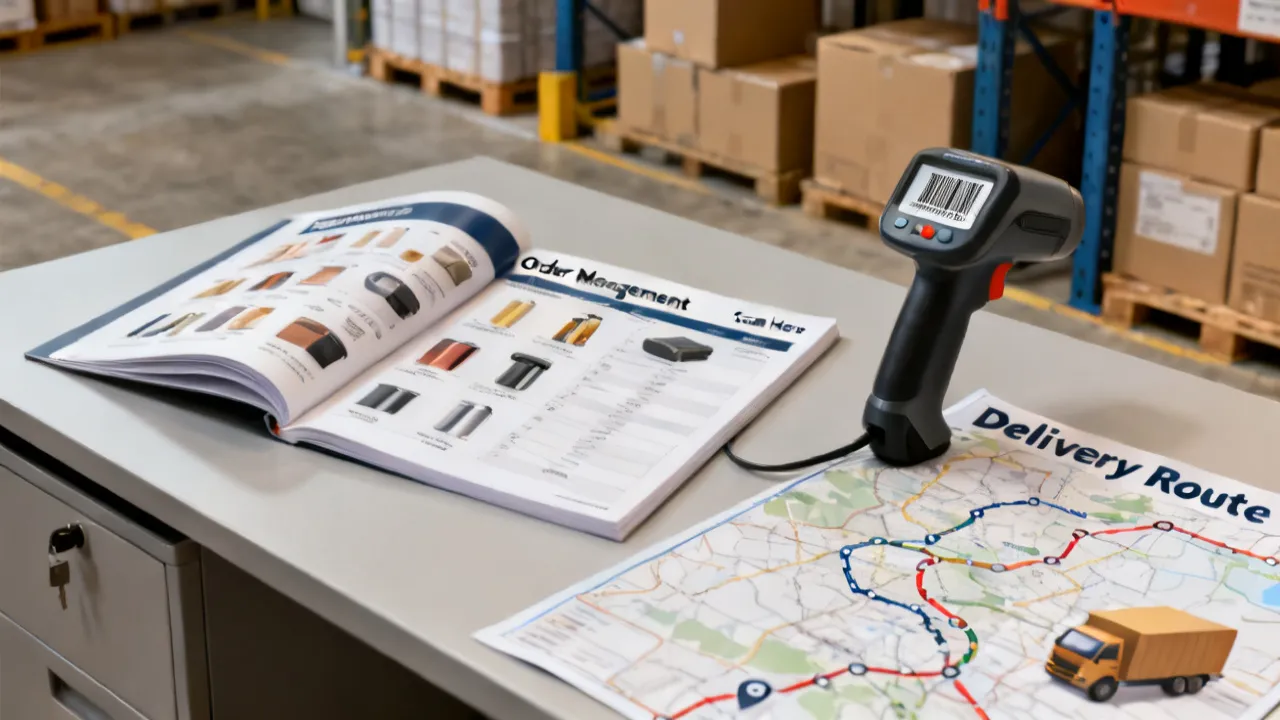
Understanding “Sdfbn” and Nearby Supply Considerations
This guide explains “Sdfbn” and related supply considerations, focusing on practical sourcing, qualification, and risk controls. Objectively, “Sdfbn” is treated here as an identifying product or process label, while “Sdfbn” and adjacent terms are discussed as informational placeholders. The article outlines evaluation criteria, documentation checks, and supplier due diligence to support consistent procurement outcomes.
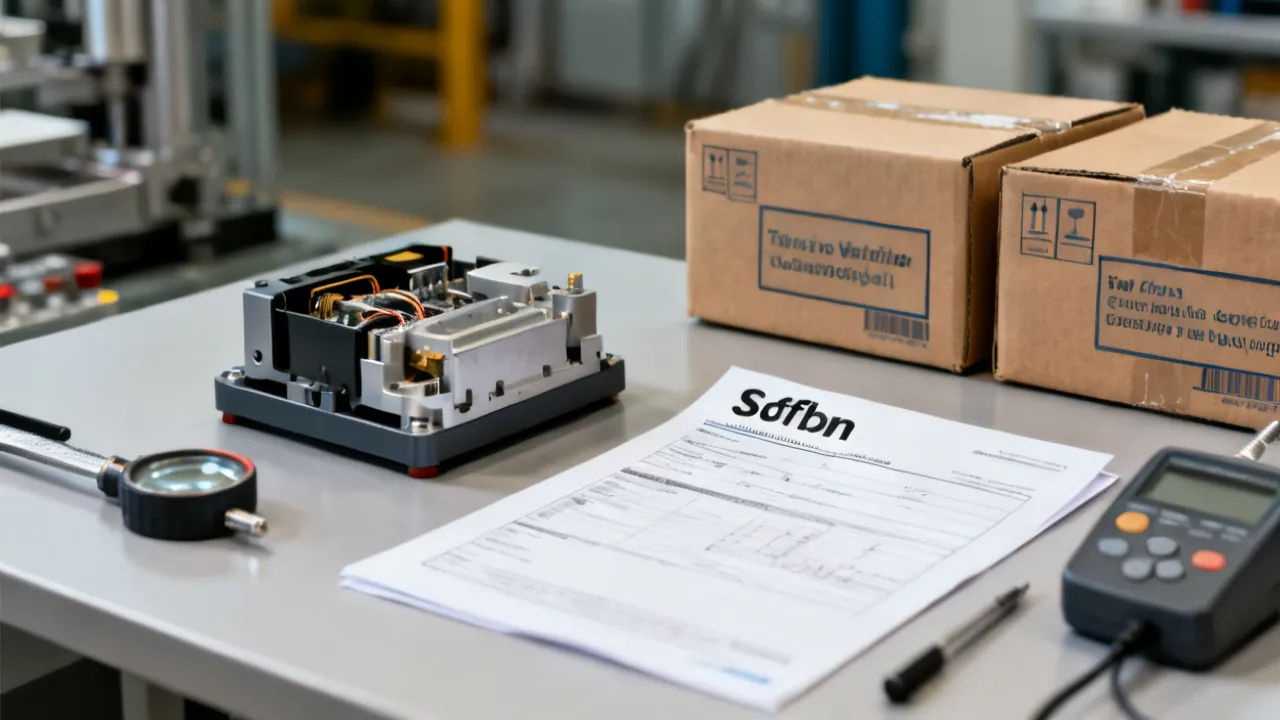
Executive overview: what matters most for “Sdfbn” sourcing
When working with “Sdfbn” as a product/process identifier, the highest-impact decisions come early: confirm the exact scope, verify supplier capability, and align on quality, documentation, and delivery expectations. Because the keywords provided here function as labels rather than widely standardized technical definitions, the most reliable approach is to treat “Sdfbn” as a traceable specification and build your procurement plan around evidence, not assumption.
In practical terms, the procurement team should prioritize (1) clear definition of what “Sdfbn” refers to (part number, batch, service tier, or process step), (2) supplier competence and production consistency, and (3) measurable acceptance criteria. This reduces downstream variability and supports repeatable outcomes across projects.
To make those priorities actionable, it helps to separate three things that teams often collapse together: the label (“Sdfbn”), the requirement (the measurable characteristics that matter), and the proof (the documents and test results that demonstrate compliance). “Sdfbn” is the label; your sourcing success depends on establishing the requirement and requiring the proof.
A mature sourcing strategy also considers the life of the agreement: what happens when the supplier changes materials, improves the process, or updates measurement tools? A label-based identifier can become a moving target if contract language does not include revision control and change notification. Therefore, early alignment is not only a “start of project” activity—it is a governance mechanism that continues through scale-up.
Finally, price is only meaningful after scope and acceptance are locked. Without that foundation, quotations risk comparing different things, leading to rework, claims, schedule slippage, and quality escapes. For “Sdfbn” sourcing, your initial target should be to structure procurement so the supplier’s quote is forced into your definitions—then build a qualification plan that validates those definitions under real conditions.
Context: how “Sdfbn” is best understood in professional sourcing
“Sdfbn” should be approached as a reference token—often similar to how companies use internal codes, SKU-like identifiers, or process names. Without an externally verifiable, standardized meaning attached to the label in the prompt, an expert procurement posture is to request the specification sheet, bill of materials (if applicable), test method references, and any relevant quality management documentation.
In many industries—manufacturing, logistics, industrial services, or technical procurement—codes like “Sdfbn” are effective only when they map to explicit requirements. Therefore, your first deliverable should be a specification mapping document: a short, structured record describing exactly what is being purchased and how it will be accepted.
To operationalize this, procurement teams typically treat “Sdfbn” as if it were a configuration item in a controlled engineering environment. That means every “Sdfbn” purchase is tied to:
- A scope statement describing what is included and excluded.
- A measurable characteristic list (dimensions, performance metrics, service outputs, tolerances, response times, etc.).
- A test/inspection method specifying how compliance is verified.
- A revision identifier (version, lot coding policy, engineering change level) that identifies the exact configuration.
- A documentation pack requirement that must arrive with shipments or be available on request.
When “Sdfbn” is only a label, suppliers may interpret it differently: one supplier might treat it as a “best effort” service name, while another might treat it as a strict engineering build standard. The difference can lead to procurement disputes or quality issues. The professional remedy is not to argue about what the label “should mean,” but to insist on traceability from the label to measurable requirements and acceptance evidence.
It is also worth noting that label-based identifiers can drift over time due to operational reasons: process improvement initiatives, equipment changes, or vendor substitutions. Therefore, sourcing governance must also consider whether “Sdfbn” purchases are tied to stable revision levels or whether the supplier is allowed to update the underlying method without renegotiation. Your procurement approach should include explicit expectations on what changes are allowed, what changes require approval, and what changes merely require notification.
In addition, “Sdfbn” may not correspond to a single physical item. In services or operational processes, “Sdfbn” could represent a service tier (e.g., basic vs. premium, certain throughput, specific response windows, or particular reporting obligations). For that reason, procurement should request deliverables and outcome metrics, not only operational descriptions. In such cases, acceptance criteria may be expressed as report formats, time-to-complete targets, audit results, incident response SLAs, or sampling-based performance measures.
All these nuances point to one procurement principle: treat “Sdfbn” as the starting point, then build a controlled definition of what matters, backed by proof requirements.
Quality and compliance: the evidence that should accompany “Sdfbn”
From an industry perspective, quality is not a promise; it is a set of verifiable signals. For an item/process labeled “Sdfbn,” typical evidence may include:
- Documented production or service workflow aligned to the defined scope
- Material or component traceability records (where relevant)
- Test reports or inspection results tied to defined acceptance criteria
- Quality management system evidence (commonly ISO 9001 alignment or equivalent, where applicable)
- Packaging, handling, and storage instructions to reduce transit-related variability
If the supplier cannot provide documents that connect “Sdfbn” to measurable outcomes, the risk profile rises. In procurement terms, this is often the point where teams transition from “requesting a quote” to “performing qualification.”
However, evidence is not only about whether documents exist. It is also about evidence sufficiency and evidence relevance. A supplier might provide a generic certificate of conformance, but if that certificate does not reference the specific “Sdfbn” scope, revision, or test method you requested, it may not be strong enough to support acceptance. Similarly, inspection reports that do not include measurement uncertainty, calibration status, sampling plan details, or nonconformance disposition can be insufficient for a high-risk application.
To avoid this, you should define the evidence pack at the contract and purchase order level. The following categories are useful for building a complete evidence framework:
- Configuration evidence: records linking the purchased output to the “Sdfbn” revision level (e.g., engineering change level, configuration ID, lot coding policy).
- Process evidence: proof the supplier followed the specified workflow (e.g., traveler records, batch records, service work orders, inspection point logs).
- Measurement evidence: calibrated measurement data, test results, calibration certificates, and instrument identifiers.
- Traceability evidence: material traceability, supplier part traceability, batch/lot trace links, or chain-of-custody in logistics contexts.
- Outcome evidence: final inspection results, acceptance test outcomes, and any performance metrics meeting the criteria.
- Nonconformance evidence: deviation reports, root-cause analysis summaries, corrective action documentation, and evidence of closure (where applicable).
Compliance expectations also vary by industry. If regulatory or customer-specific standards apply, procurement should identify which standards are mandatory and which are preferred. For instance, if the output must comply with a safety, environmental, or emissions standard, procurement should require compliance documentation aligned to the standard. In heavily regulated contexts, proof might include certificates, declarations, audit results, or documented testing against specific regulatory test protocols.
A further consideration is whether evidence should be submitted proactively or upon request. For lower-risk items, sampling of documentation may be sufficient. For higher-risk “Sdfbn” outputs (those that could affect product safety, system reliability, or customer acceptance), you may require documentation to arrive with every shipment or every batch, at least for the initial qualifying period.
Procurement also benefits from specifying who reviews the evidence and how disputes are handled. If you only define acceptance criteria but not the review mechanism, teams can end up with delays during onboarding, especially when evidence is incomplete or when results are near thresholds. Including an evidence review timeline in the contract reduces downtime and prevents “silent acceptance” where issues go unresolved.
Lastly, remember that packaging and handling instructions can be part of quality. For example, if “Sdfbn” involves temperature-sensitive materials, moisture-sensitive components, or fragile parts, then storage conditions, packaging standards, and transit monitoring may be critical. In these cases, the “quality” evidence pack might include packaging spec compliance and, where relevant, environmental condition records (such as humidity indicators or temperature log data).
Pricing considerations: how price interacts with requirements
Pricing for an item/process identified as “Sdfbn” is rarely determined by the label itself. Instead, price is shaped by specification complexity, tolerances, testing frequency, batch size, lead time, tooling requirements, logistics conditions, and documentation depth.
Rather than assuming a single “correct price,” a professional sourcing approach treats price as one component of a total cost model. Even without explicit price figures in the prompt, you can structure quotes to separate:
- Unit or line-item cost for the defined “Sdfbn” scope
- One-time costs (setup, tooling, prototyping, certification support)
- Quality assurance costs (inspection, testing, sampling plans)
- Logistics and packaging costs
- Documentation costs (certificates, traceability, reports)
This is particularly important when suppliers offer different tiers of “fit” to the same label. Two quotes can both mention “Sdfbn” while covering different acceptance standards. Structuring the quote request prevents that mismatch.
To make this more practical, procurement teams often request a “commercial breakdown” in addition to technical quotations. A commercial breakdown forces the supplier to assign costs to:
- Labor and manufacturing/service effort associated with your scope.
- Materials and consumables used to meet the specification.
- Test and inspection activities (including any special testing beyond standard practice).
- Documentation production (including traceability work and report preparation time).
- Compliance and certification activities that support regulatory/customer obligations.
- Transportation and packaging that reduce risk of damage or performance degradation.
Once you have those components, you can compare quotes more fairly. For example, one supplier might offer a lower unit price but a higher cost in inspection or documentation. In a total cost model, that might not be cheaper if you anticipate higher internal labor to handle incomplete evidence packs or more returns due to insufficient testing.
Another pricing factor that procurement should explicitly address is scope inclusions and exclusions. Suppliers sometimes quote “standard” scope and treat special requirements as extras—especially when “Sdfbn” is ambiguous. By contrast, if you have a precise spec mapping document, you can reduce supplier opportunism because you make it harder for the supplier to argue that an extra requirement was never included.
Procurement also should consider price validity windows. If “Sdfbn” is tied to specific materials with volatile pricing, specify lead time and raw material assumptions. If the supplier must source from an upstream provider, ask how long the upstream supply agreement is stable. Contract terms can include what happens if upstream inputs change or if the supplier can no longer meet revision-level requirements.
In addition, you should clarify whether prices include:
- Initial qualification/pilot testing
- First-article inspection (FAI) or equivalent
- Setup and training for your receiving/handling team
- Rework and corrective action costs for nonconforming outputs
- Expedited logistics for urgent orders
- Re-certification costs if standards change
For high-risk “Sdfbn” sourcing, you may also want to request cost impacts for future scenarios: what happens if order quantities increase by 2x? What if higher documentation requirements are needed? This approach can prevent future renegotiations driven by surprise cost assumptions.
Ultimately, good procurement practice is to align pricing with the specification and acceptance requirements. When that alignment is achieved, price comparisons become meaningful and defensible.
Supplier due diligence: verifying capability before scaling
For “Sdfbn,” the most reliable procurement strategy involves supplier qualification and ongoing performance monitoring. The objective is to confirm that the supplier can consistently meet the stated acceptance criteria across time, batches, and shipping conditions.
Suggested diligence signals include:
- Documented process control and training records
- Capacity planning evidence (ability to meet your lead time)
- Corrective action capability (root-cause analysis and documented remediation)
- Consistency of inspection and measurement tools (calibration status)
- Clear communication channels for changes affecting “Sdfbn” scope
Where possible, you can request a sample or pilot run tied to the same code and acceptance criteria used for production purchases.
Supplier due diligence can be structured in layers. A typical model begins with a document review, moves to a process review or audit (remote or on-site), then executes a pilot/qualification phase. Finally, once volume starts, it continues with performance monitoring and periodic reassessment.
To expand that into a robust due diligence checklist, consider the following categories:
- Quality system maturity: Does the supplier have a quality management system in place? How are nonconformities handled? What is the typical time to close corrective actions?
- Measurement system capability: Are instruments calibrated? Is there evidence of measurement system analysis (where relevant) and controls to reduce variability?
- Process stability: Do they provide evidence of process control metrics, such as Cpk/Ppk for critical characteristics in manufacturing contexts, or performance baselines in service contexts?
- Training and competence: Are operators trained on the relevant workflow? Can they show training records and competency assessments?
- Supplier-subcontractor management: If upstream inputs are sourced elsewhere, how does the supplier verify their quality and traceability?
- Change control: What happens when the supplier modifies materials, suppliers, or methods? Are changes documented and approved?
- Business continuity: Can the supplier maintain throughput during disruptions? Are they transparent about lead-time risks?
Even if a supplier claims capability, procurement should test capability with the right signals. “Sdfbn” qualification should be designed to answer specific questions:
- Can the supplier deliver consistent outputs that meet the acceptance criteria?
- Can the supplier provide the required documentation with the expected revision level?
- Can the supplier maintain performance across multiple shipments?
- Can the supplier manage deviations without repeating failures?
A common procurement mistake is to qualify a supplier based on one good batch or one successful pilot without verifying consistency across time. For “Sdfbn,” the label might map to a process that has multiple steps—some of which only reveal issues after a certain run length or after a tool wears. Therefore, qualification should include enough data to detect variation. If a pilot run includes only one batch, procurement might still be exposed if subsequent batches behave differently.
Another nuance is measurement tool consistency. If the supplier changes instruments or uses measurement tools with inconsistent calibration intervals, results can drift even when the process is stable. That is why calibration status and instrument identifiers should be requested as part of the evidence pack.
Finally, procurement should confirm that supplier communication is not only responsive but structured. For example, during qualification and ongoing operations, you should define:
- Who the escalation contacts are
- What qualifies as an urgent nonconformance
- Response timelines (e.g., acknowledge within 24 hours, provide containment within 48 hours)
- How root-cause investigations are documented
This ensures that “Sdfbn” quality issues are handled quickly and transparently, minimizing operational disruption.
Procurement workflow: integrating “Sdfbn” into a controlled purchasing cycle
An expert procurement workflow usually follows a sequence that reduces ambiguity:
- Define: convert “Sdfbn” label into an explicit technical/specification requirement.
- Request: issue a quote request that includes acceptance criteria and required documentation.
- Evaluate: compare not only price, but also lead time, testing approach, and evidence quality.
- Qualify: run a pilot/test shipment (or process proof) using the same “Sdfbn” code.
- Contract: include change-control terms for any updates affecting “Sdfbn.”
- Monitor: measure supplier performance using agreed KPIs (on-time delivery, defect rate, documentation compliance).
Done properly, this workflow prevents “label drift”—a common failure mode where suppliers interpret codes differently over time.
To strengthen the workflow further, it helps to integrate the internal stakeholders who typically influence procurement outcomes: engineering (for technical requirements), quality (for acceptance criteria and evidence review), logistics (for shipping and handling), and finance/legal (for contract terms and cost modeling).
A controlled purchasing cycle benefits from a “gate” model. Each gate requires specific artifacts before moving forward. For example:
- Gate 1 (Specification gate): “Sdfbn” label is mapped to measurable requirements, revision levels, and test methods.
- Gate 2 (Commercial gate): quotes are structured to reflect the defined scope and evidence requirements.
- Gate 3 (Qualification gate): pilot runs demonstrate acceptance criteria and documentation sufficiency.
- Gate 4 (Contract gate): contract includes change control, documentation obligations, and dispute resolution mechanisms.
- Gate 5 (Production gate): supplier begins volume with defined KPIs and monitoring cadence.
In addition, it is valuable to define how exceptions are handled. For example, if a pilot yields borderline results, procurement should specify whether and how the supplier can propose corrective actions, retests, or rework. Without exception handling rules, teams can get stuck in negotiations after issues arise.
Procurement also should address operational readiness. That includes ensuring your receiving team knows how to recognize the correct “Sdfbn” revision level and how to handle shipments according to the packaging and storage instructions. If your warehouse or receiving process is not aligned, even correct supplier output can become unusable due to mishandling.
Another part of workflow management is ensuring revision-controlled purchase order coding. When creating purchase orders, procurement should include:
- The “Sdfbn” revision level
- Lot/batch code expectations (if applicable)
- Evidence pack requirements
- Inspection and acceptance process
- Delivery schedules and lead time commitments
This reduces the risk of the supplier shipping a different configuration under the same label.
Once volume starts, monitoring must be structured. Procurement KPIs should be aligned to what matters most for “Sdfbn”: acceptance rate, documentation compliance, and responsiveness to nonconformities. If you only track on-time delivery but ignore evidence compliance, you might accept shipments late or reject documentation later, creating hidden costs.
In short, the controlled purchasing cycle is how you make “Sdfbn” sourcing repeatable and defensible.
Risk controls: what to watch when keywords are placeholders
The prompt provides keywords as placeholders (including isolated tokens and blanks). In real sourcing, placeholder keywords often correspond to internal naming conventions, incomplete brand references, or incomplete scope notes. When that happens, the risk is not merely “getting the wrong item.” The larger risk is misalignment between procurement, engineering, quality teams, and the supplier.
To mitigate this, insist on:
- Specification traceability: every requirement must map to a document, standard, or test method
- Clear revision control: ensure “Sdfbn” corresponds to the correct revision level
- Change notification: suppliers must inform you of process changes that could affect outputs
- Acceptance clarity: define pass/fail criteria before shipment
These controls are most effective when embedded into procurement documents: RFQs, purchase orders, quality agreements, and contracts.
When dealing with placeholder-like labels, procurement should also consider risk in terms of likelihood and impact. Likelihood is driven by ambiguity, supplier maturity, complexity of the process, and past performance. Impact is driven by how critical the “Sdfbn” output is to safety, performance, and customer acceptance. High-impact items require more evidence, tighter change controls, and stronger acceptance verification.
Common risk patterns that appear with ambiguous labels include:
- “Works as described” acceptance: teams accept based on supplier claims rather than measurable criteria.
- Incomplete drawings or incomplete specs: the label is tied to a spec that exists, but the exact revision is not shared.
- Documentation gaps: evidence is promised but not delivered, or delivered late.
- Testing misalignment: supplier tests something adjacent but not identical to what your acceptance requires.
- Sampling disputes: different parties interpret sampling plans differently, leading to disagreement on whether the batch passes.
- Nonconformance disposition ambiguity: containment and corrective action expectations are unclear.
To control these risks, procurement can add contractual language and operational requirements such as:
- Supplier must provide a signed specification mapping sheet before first order shipment.
- Supplier must confirm the “Sdfbn” revision level on every purchase order acknowledgment.
- Supplier must not implement process/material changes without notification and, for certain change types, formal approval.
- Supplier must include evidence pack items in a standardized format, delivered digitally and physically where required.
- Any deviation from specified test methods requires prior agreement.
Additionally, risk control should include the human element: ensure internal teams understand the mapping and acceptance criteria. If receiving inspectors and quality engineers are not aligned with the spec mapping, they might reject correct shipments or accept nonconforming shipments due to confusion.
For placeholder-like labels, another practical safeguard is to require “first-article” evidence and to limit the first production order quantity. A controlled initial release helps prevent scaling defects. After performance is demonstrated, scaling can proceed with confidence.
Risk controls are not just about preventing failures—they are also about enabling quick recovery when failures occur. If a nonconformance happens, you want the supplier to have a documented corrective action process and you want the contract to define timelines and responsibilities. That way, “Sdfbn” sourcing becomes resilient rather than reactive.
Comparison supplement: evaluation options for “Sdfbn” suppliers
Use the table below as a decision aid to structure supplier evaluation. It intentionally avoids pricing numbers because price must be quoted against your exact “Sdfbn” scope, quantities, tolerances, and documentation requirements.
| Supplier evaluation dimension | Lower-risk option | Higher-risk option |
|---|---|---|
| Definition clarity for “Sdfbn” | Supplier provides specification mapping (scope, revision, test methods) | Supplier uses only internal wording with no measurable acceptance criteria |
| Quality evidence | Inspection/test reports and traceability records tied to “Sdfbn” | Generic certificates not aligned to the requested scope |
| Process control | Documented workflows, calibrated measurement tools, corrective actions | Unclear process documentation; weak remediation evidence |
| Change control | Formal notification and approval pathway for changes affecting “Sdfbn” | No formal method for communicating changes |
| Delivery reliability | Transparent lead-time commitments and capacity communication | Promises made without evidence; frequent schedule changes |
To expand evaluation beyond the table, you can also assess “Sdfbn” suppliers using a structured scoring rubric. The rubric can weight categories based on the risk profile. For example, if “Sdfbn” is critical to safety, quality evidence and process control might receive higher weight than delivery reliability. If “Sdfbn” is primarily a service, evidence might focus more on reporting completeness and SLA adherence rather than physical inspection outcomes.
Here is an example rubric approach that procurement teams can use without needing price numbers:
- Scoping clarity (25%): Does the supplier provide a complete mapping of “Sdfbn” to measurable requirements?
- Evidence strength (30%): Are documents relevant, revision-controlled, and aligned to test methods?
- Process stability (20%): Can the supplier demonstrate consistent output across batches or service cycles?
- Change governance (15%): Does the supplier have formal change control mechanisms?
- Operational readiness (10%): Can they deliver required evidence and outputs reliably on schedule?
After the rubric identifies the best candidates, the procurement team can run qualification pilots to validate the assumptions behind the scores. The key is that the rubric makes it hard to “fall in love with price” while ignoring technical and quality risk.
Source and justification (professional standards references)
- ISO 9001: Widely used quality management system framework; supports structured process control and corrective actions. Source: ISO (International Organization for Standardization).
- OECD Due Diligence Guidance: Provides a structured approach for identifying, preventing, mitigating, and accounting for risks in value chains. Source: OECD (Organisation for Economic Co-operation and Development).
- Lean / Continuous improvement concepts: Used broadly to reduce defects and variation in operational processes. Source: Publications from recognized bodies and academic literature (e.g., Lean management literature).
These references support the article’s emphasis on evidence-based qualification, process control, and risk mitigation rather than unverifiable claims.
To connect these references more concretely to “Sdfbn” sourcing practice, consider how each one translates into operational requirements:
- ISO 9001: prompts structured process control, documented procedures, internal audits, management review, and corrective action. In “Sdfbn” sourcing, this supports consistent production/service delivery and systematic handling of nonconformities.
- OECD Due Diligence Guidance: encourages systematic risk identification, prevention, mitigation, and tracking across the value chain. For “Sdfbn,” this can include verifying supplier-subcontractor risks, materials sourcing risks, and documentation reliability risks.
- Lean / continuous improvement: focuses on reducing defects and variation, identifying root causes, and improving workflows. In “Sdfbn” sourcing, this supports a culture where suppliers measure variation, learn from defects, and implement sustained corrective action rather than repeated fixes.
Procurement does not typically need to label its procedures “ISO compliance” or “OECD due diligence” in day-to-day operations. Instead, procurement can use these frameworks to justify why documentation, traceability, and governance mechanisms are required.
Step-by-step guide: qualifying “Sdfbn” before committing volume
Below is a practical, repeatable sequence you can apply whether “Sdfbn” relates to a manufactured component, a technical service, or an operational process output.
Step 1: Translate “Sdfbn” label into an explicit scope document
Request a short specification mapping sheet from the supplier. It should list what “Sdfbn” covers, including measurable characteristics, applicable standards, and how results are tested or inspected.
To improve the effectiveness of this step, procurement should encourage a standardized template for the supplier. A good template ensures that the scope mapping is not just narrative but structured. For example, the mapping sheet can contain sections such as:
- Scope: definition of included items or service activities
- Exclusions: what is not included, to prevent disputes
- Applicable standards: list of standards, specifications, or internal requirements referenced
- Measurable characteristics: table of key parameters with tolerances or acceptance ranges
- Test/inspection method: method references (standards or internal methods) and equipment used
- Revision level: the “Sdfbn” configuration revision and how it is identified
- Documentation pack: what documents are provided and when
- Nonconformance handling: how deviations are handled and reported
If the supplier cannot provide a structured mapping sheet, procurement can treat that as a qualification risk. At minimum, procurement should request enough information to build its internal mapping document.
Another important subtask in Step 1 is identifying what “success” looks like from both parties. For manufacturing outputs, success might be dimensional and performance compliance. For service outputs, success might be completion within time windows, correct handling procedures, and report correctness. Aligning expectations early prevents “outcome drift” later.
Step 2: Define acceptance criteria and required documentation
Agree on pass/fail thresholds, sample size (if sampling applies), inspection frequency, and document types expected per shipment (test reports, certificates, traceability details).
Acceptance criteria should be specific enough that different reviewers would interpret them similarly. If criteria are subjective—such as “meets quality standards” or “acceptable condition”—they should be replaced with measurable criteria or clearly defined grading rules.
In addition, you should define how acceptance is verified. For example:
- Will the supplier perform final inspection and you accept based on provided records?
- Will you perform incoming inspection at your facility?
- Will there be joint verification or third-party testing?
- Will there be conditions under which you may reject shipments even if documentation suggests compliance?
Procurement should also define documentation completeness rules. For example, you can specify:
- Which documents are mandatory for acceptance (e.g., certificate of conformance, test report, traceability log).
- In what format and language they must be delivered.
- When they must be delivered (with shipment vs. within X days).
- Whether electronic copies are acceptable or whether originals are required.
- How revision control is indicated on documents.
Documentation rules reduce the risk of “documentation acceptance” that occurs after the fact but too late to be useful. They also help receiving teams decide quickly whether shipments can be used.
If the “Sdfbn” output involves multiple characteristics, procurement can also structure acceptance criteria by criticality. Critical characteristics might require 100% inspection or tighter sampling. Non-critical characteristics might be accepted with sampling. A risk-based acceptance plan is more cost-effective and more defensible than a one-size-fits-all plan.
Step 3: Conduct a pilot run (or controlled test period)
Run a pilot under the exact “Sdfbn” code and production workflow intended for volume. Validate that measured outcomes align with your acceptance criteria.
Pilot runs are sometimes treated as purely technical exercises. For “Sdfbn” sourcing, pilot runs should also validate procurement and operational readiness. That includes confirming that:
- The supplier uses the correct “Sdfbn” revision level.
- The supplier provides the correct documentation pack.
- Delivery schedules align with lead time commitments.
- Packaging and handling instructions are followed.
- Nonconformance processes work if issues occur.
A good pilot plan defines:
- Sample size and number of batches: enough to detect variability, not just enough to “try it once.”
- Acceptance thresholds: same as production thresholds.
- Test method alignment: ensure tests match agreed methods.
- Data review cadence: regular meetings to review early results.
- Retest/rework rules: what happens if results are borderline or if there is a process deviation.
If the “Sdfbn” output is a service, the pilot might include real operational scenarios, not just desk-level verification. For example, a logistics-related service pilot might include real shipment processing and verify documentation accuracy, handling practices, and timeliness. A technical service pilot might include an actual customer-facing task and verify deliverable quality.
Procurement should also plan how to close the pilot. Closure should include:
- Acceptance decision: pass/fail against the agreed criteria
- Documentation review: confirm evidence completeness and revision correctness
- Operational learning: capture any gaps in spec interpretation
- Corrective action outcomes: ensure issues identified during pilot have resolution plans
When pilot closure is structured, scale-up becomes a controlled decision rather than a hope-based transition.
Step 4: Review root-cause and corrective action readiness
Ask how deviations are handled: how nonconformities are recorded, investigated, and prevented from recurring. Ensure they have corrective action procedures appropriate to your risk level.
Procurement should evaluate corrective action readiness in two ways: process maturity and timeliness. A supplier might have a corrective action process on paper, but if it takes too long to investigate, you still experience operational downtime and cost.
To make corrective action evaluation concrete, you can request from the supplier:
- An example of a recent nonconformance report, with details on root cause, containment actions, and closure evidence.
- A description of their corrective action workflow (who initiates, who approves, time targets).
- How they verify effectiveness (i.e., not just “we fixed it,” but “we confirmed it no longer occurs”).
- How they manage recurrence prevention across teams and sites.
Additionally, you may want to define corrective action expectations in the contract. For example, define:
- Containment timeline after nonconformance notification
- Root-cause analysis timeline
- Corrective action implementation timeline
- Effectiveness verification approach
- Escalation path if timelines are not met
For high-risk “Sdfbn,” procurement should consider requiring a formal corrective action plan before continuing volume deliveries. For lower-risk items, you may allow shipment continuation under conditions, such as increased inspection or limited scope until corrective actions are confirmed.
One more practical aspect: confirm whether the supplier includes corrective actions that involve upstream changes. If a nonconformance is due to upstream materials or subcontractor processes, procurement should ensure the supplier’s corrective action scope includes those upstream elements, not only end-stage fixes.
Step 5: Lock revision control and change notification
Confirm that any changes affecting “Sdfbn” scope (materials, process parameters, test method changes) require approval or notification before implementation.
Revision control is one of the most important “Sdfbn” sourcing safeguards. Without it, the supplier might ship outputs that differ from what your acceptance criteria were originally defined for—creating a situation where the supplier believes it is still meeting “Sdfbn,” but you believe it is not.
To lock revision control, you can:
- Require that “Sdfbn” maps to a specific revision level in the spec mapping document.
- Require that the supplier references that revision level in purchase order acknowledgments and shipment documentation.
- Define which changes require approval (e.g., material substitutions, process parameter changes affecting critical characteristics, test method changes, configuration changes).
- Define which changes require notification only (e.g., non-critical process improvements that do not affect acceptance criteria), subject to verification requirements.
- Specify lead times for change requests and timelines for approval or objection.
Change notification rules should be tied to measurable risk categories. For example:
- Type A changes (high impact): require prior approval and possibly a new pilot run or re-qualification.
- Type B changes (medium impact): require notification and documentation updates; acceptance may be monitored more closely.
- Type C changes (low impact): require notification, but no approval needed; evidence may be updated in the next documentation cycle.
In addition, procurement should require that suppliers provide updated evidence packs after approved changes. It is not enough to approve the change; you must ensure the documentation delivered with shipments reflects the approved configuration.
Finally, ensure your internal procurement and quality teams can enforce revision control. That includes training receiving staff to check revision indicators and setting up internal systems to store and reference revision-controlled documents.
Step 6: Monitor performance with clear KPIs
Track on-time delivery, documentation compliance, and quality outcomes per batch or shipment. Use results to determine whether scaling is appropriate.
KPIs are only effective if they align with what you care about and if they are measured consistently. For “Sdfbn,” typical KPIs include:
- On-time delivery: percentage of shipments delivered within agreed windows.
- Documentation compliance: percentage of shipments with complete, correct, revision-aligned evidence packs.
- First-pass acceptance rate: percentage of shipments passing acceptance criteria without rework or exceptions.
- Defect rate or nonconformance rate: number of nonconformities per batch/lot, categorized by severity.
- Corrective action timeliness: average time to containment, root cause, and closure.
- Change control adherence: whether changes were notified/approved as required.
- Supplier responsiveness: time to acknowledge and respond to issues.
It is also helpful to establish a KPI reporting cadence. For example:
- Weekly during pilot and early ramp-up
- Monthly during volume stabilization
- Quarterly business reviews for higher-level trend analysis
Procurement should define thresholds that trigger actions. For instance, if documentation compliance falls below a certain percentage, you might require increased inspection or pause shipments until the supplier corrects the documentation process. If defect rates rise, you might require corrective action plans and re-qualification.
KPIs also support negotiation and continuous improvement. Suppliers can be recognized for good performance, but performance data also creates the basis for structured corrective actions when issues emerge. Over time, this turns “Sdfbn” sourcing into a learning system rather than a repeated restart.
Conditions and requirements for stable procurement outcomes
- Specification completeness: procurement must receive a mapping from “Sdfbn” to measurable requirements.
- Documented acceptance: both parties must agree on the evidence required for “pass.”
- Revision control: “Sdfbn” must correspond to a specific revision level or controlled configuration.
- Communication cadence: define how changes, delays, and quality issues are reported.
- Pilot validation: qualification should include at least one controlled trial under real conditions.
Beyond these conditions, there are additional requirements that often determine whether procurement remains stable once volume begins. Stable outcomes typically depend on strong internal alignment and external alignment:
- Internal alignment: procurement, engineering, quality, and logistics must all use the same “source of truth” for the “Sdfbn” scope and acceptance criteria.
- External alignment: supplier must accept and commit to the same requirements, ideally through a signed quality agreement or documented mapping confirmation.
- Operational alignment: receiving and inspection processes must be configured to validate “Sdfbn” revision levels and acceptance criteria.
- Documentation workflow alignment: your systems must store, retrieve, and track evidence packs and nonconformance records.
Stable procurement also requires clear escalation pathways. Many sourcing issues become disputes because no one knows how to escalate or what evidence is needed. For “Sdfbn,” escalation pathways should be formal and time-bound.
Another element is change predictability. Procurement stability increases when suppliers can forecast when changes might occur and when they can provide advance notice. This is particularly relevant if “Sdfbn” ties to upstream components or volatile materials. Change predictability allows procurement to plan qualification updates and avoid sudden disruptions.
Finally, stable outcomes depend on the supplier relationship structure. If communication is only reactive, small issues become large. If communication includes proactive reporting (e.g., evidence completeness status, early warnings on schedule risk, early warnings on quality trends), procurement teams can prevent problems before they become nonconformities.
FAQs
Q1: What does “Sdfbn” mean?
In the context of this guide, “Sdfbn” is treated as an identifying label that must be connected to an explicit specification. Because the prompt does not provide a standardized definition, the practical answer is: confirm meaning through the supplier’s documented scope mapping, test methods, and acceptance criteria.
In a real sourcing engagement, you should not accept “Sdfbn” as self-explanatory. Instead, you should require a mapping document that explains what the label covers, which revision level it corresponds to, and how compliance is proven. Once that mapping exists, “Sdfbn” becomes actionable: it can drive quote creation, acceptance verification, and change control governance.
Q2: How should I request pricing for “Sdfbn” without ambiguity?
Ask for a quote that separates unit/line cost from setup, testing, documentation, and logistics. Include the acceptance criteria and required documents in the request so the supplier’s quote reflects the same “Sdfbn” scope you intend to purchase.
To reduce ambiguity further, include a list of assumptions and request the supplier to explicitly confirm or challenge them. For example, ask the supplier to confirm:
- Which test methods will be used and whether they differ from the agreed methods
- What documentation pack will be delivered with each shipment
- Whether any additional certifications are included or extra-cost
- Whether lead time includes production time and transit time
This approach ensures that the quote is tied to your definitions, not to the supplier’s interpretation of the label.
Q3: What evidence should accompany each “Sdfbn” shipment?
Typically, evidence includes inspection or test reports tied to the agreed acceptance criteria, plus any relevant traceability or certificate-of-conformance documentation. The exact set depends on the industry and risk profile.
Procurement can make this concrete by defining an evidence checklist. A robust checklist might specify:
- Certificate of conformance referencing the “Sdfbn” revision level
- Test reports with measured values, sampling plan details, and acceptance determinations
- Traceability records linking each lot/batch to source materials (where applicable)
- Calibration evidence for key instruments used in testing (as required)
- Packaging compliance confirmation or handling/storage instructions (as relevant)
- Nonconformance reports (if any deviations occurred) and closure evidence
For higher-risk “Sdfbn,” require documentation completeness for every shipment. For lower-risk items, you may use sampling, but the contract should still define what happens if documentation fails completeness checks.
Q4: How do I qualify a new supplier for “Sdfbn”?
Start with a scope mapping request, then run a pilot or controlled test period. Evaluate process control, corrective action readiness, and change-control procedures. Continue with performance monitoring before scaling volume.
A useful qualification strategy includes both technical and commercial validation. Technical validation ensures outputs meet acceptance criteria. Commercial and operational validation ensures the supplier can deliver on schedule, provide complete documentation, and handle exceptions effectively.
Qualification should also consider whether your internal systems are ready to accept the supplier’s evidence format. Sometimes qualification fails operationally because receiving systems cannot parse documentation or because the supplier uses a different revision naming convention. Plan to validate the evidence delivery workflow as part of qualification.
Q5: What if suppliers interpret “Sdfbn” differently?
That is usually a sign that the label has not been properly translated into requirements. Require a revision-controlled specification mapping and align on measurable acceptance criteria before any large commitment.
Beyond mapping alignment, you can prevent interpretation differences by adding explicit definitions to the contract and purchase order. Include:
- What constitutes the “Sdfbn” configuration (revision, included components/services)
- Which tests and criteria determine pass/fail
- How evidence must reference “Sdfbn” revision levels
- What process/material changes are allowed without approval
If suppliers continue to interpret “Sdfbn” differently after mapping alignment, treat it as a qualification risk. The best remedy is not negotiation of meaning after the fact, but enforcement of revision-controlled requirements upfront.
Q6: Does location matter when sourcing “Sdfbn”?
Logistics and handling conditions often matter more than the label itself. This guide also uses the term “nearby” where the prompt implies location-specific keywords, emphasizing that transit conditions, lead time realism, and packaging requirements should be reviewed regardless of where the supplier operates.
Location can affect sourcing outcomes in multiple ways:
- Transit time and variability: longer routes can increase risk of delays and damage.
- Environmental conditions: temperature, humidity, and exposure risks can vary by route.
- Customs and regulatory processes: cross-border shipments may require additional documentation that must be included in the evidence pack.
- Geopolitical disruptions: supply chain stability can be affected by local constraints.
Therefore, in “Sdfbn” sourcing, procurement should treat logistics and packaging instructions as part of the quality system. Evidence may include handling instructions compliance, shipping method confirmation, and—where relevant—environment monitoring data.
Q7: Can I rely on the supplier’s description without documents?
Relying on description alone increases procurement risk. For “Sdfbn” purchases, request documents that connect the label to measurable outcomes—especially acceptance criteria, test methods, and corrective action processes.
Even if a supplier has a strong reputation, procurement should rely on evidence because the evidence is what survives audits, disputes, and future investigations. Documents reduce ambiguity, support acceptance decisions, and provide traceability if nonconformities appear later.
In many procurement cases, the “description without documents” approach might appear to work initially, but it typically breaks when:
- You need to justify acceptance decisions internally
- A deviation arises during shipping or inspection
- Customer requirements escalate or audits occur
- The supplier changes process conditions or upstream inputs
Therefore, procurement should treat documentation as a requirement rather than an optional courtesy.
Conclusion: building a dependable procurement approach around “Sdfbn”
“Sdfbn” may begin as a label, but it should end as a controlled specification. By prioritizing evidence-based qualification, clear acceptance criteria, revision control, and ongoing monitoring, procurement teams can reduce ambiguity, improve consistency, and make pricing comparisons meaningful. If you treat “Sdfbn” as a traceable requirement rather than a vague keyword, you create a sourcing system designed for stability—even when the underlying terminology is incomplete or placeholder-like.
In practice, dependable “Sdfbn” sourcing is less about finding the “correct interpretation” of the label and more about building governance that makes the interpretation irrelevant. When your procurement approach requires mapping, evidence, revision control, and change governance, the supplier’s ability to meet the requirements becomes measurable. That shift—from assumption to verification—is what turns “Sdfbn” procurement from an ambiguous task into a repeatable process.
When procurement teams adopt this evidence-first posture, they also create better collaboration between functions: engineering gets clear requirements, quality gains reliable acceptance signals, logistics receives the correct handling instructions, and finance/legal can support enforceable contract terms. The result is reduced rework, fewer disputes, and a smoother scaling path from pilot to volume.
-

A Guide to Cost-Efficient Small Electric Cars for Seniors
-
Mastering Debt Consolidation: Boost Your Credit Score and Manage Interest Rates
-
Your Guide to Loans, Credit Checks, and Interest Rates
-
Affordable Independent Living: Finding the Right Senior Housing
-
Guide to Senior Living Apartments: Affordable and Comfortable Environments