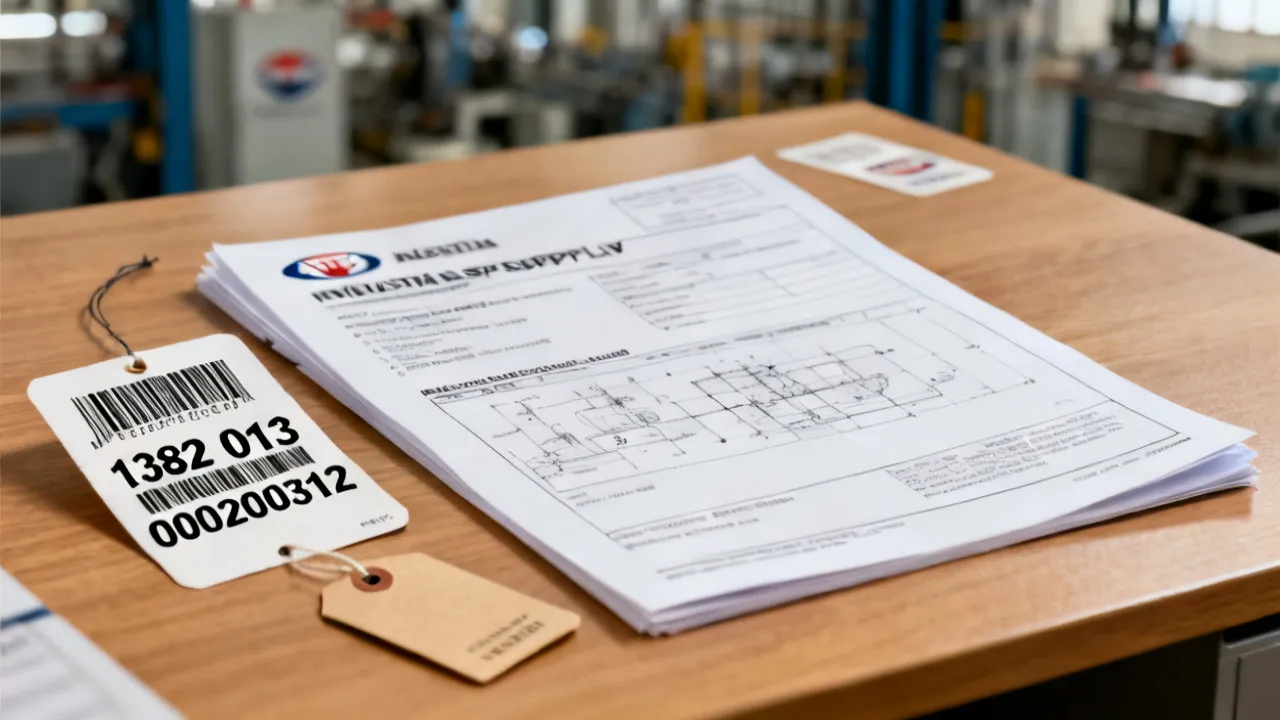
Understanding Code 1382 013 000200312 in Supply Chains
This guide explains how identifiers like 1382 013 000200312 support traceability in procurement and logistics. Objectively, such codes help distinguish batches, simplify audits, and reduce handling errors across supplier networks. It also clarifies how terms such as “013” and “000200312” are commonly used as structured reference segments in operational documentation.
Top takeaway: how 1382 013 000200312 functions in real procurement work
In procurement and logistics, identifiers such as 1382 013 000200312 are not “just numbers”—they are structured references designed to improve traceability, streamline receiving workflows, and support compliance-oriented documentation. When used alongside item descriptions like the broader keyword strings you provided (including 1382 013 000200312 and the other bracketed code fragments), these identifiers help organizations reconcile orders, verify shipment contents, and align internal records with supplier documentation.
From an industry perspective, the practical value of this kind of code shows up in daily operations: fewer manual lookups at goods-in, faster cross-checking during audits, and clearer accountability when issues arise (for example, a mismatch between ordered and delivered quantities). Even when systems are partly automated, the reliability of the identifier format is what keeps data consistent across ERPs, warehouse management systems (WMS), and supplier portals.
Below, you’ll find an objective, expert-oriented explanation of how codes like 1382 013 000200312 typically work, how they relate to procurement processes, and what “good practice” looks like when supplier details and operational conditions are involved.
Note on provided keywords: You supplied multiple keyword fragments, including blank separators around “'' '' '' ”. The only clear, actionable numeric identifier among them is 1382 013 000200312. The article therefore centers on that identifier while treating the other keyword fragments as contextual placeholders for structured inventory/procurement references.
1) What 1382 013 000200312 represents: structured traceability, not arbitrary labeling
Codes similar to 1382 013 000200312 are typically designed with a structure that can carry multiple types of meaning. While the exact semantics depend on the issuing organization, a common pattern in supply-chain identifiers is segmentation—parts of the code map to categories such as product family, plant/site, batch or lot, or internal reference keys.
In operational documentation, that segmentation matters because it reduces ambiguity. When staff handle physical goods, they experience variations that data entry alone cannot solve: packaging can change, labels can be rotated, and descriptions can be reformatted. Meanwhile, the identifier is engineered to remain stable enough to function as a consistent reference across different systems.
Consider the types of segmentation that often appear in structured numeric strings. A code may include:
- A category or family segment (e.g., what the item is, or which catalog grouping it belongs to).
- A site/plant segment (e.g., where it was manufactured or consolidated).
- A batch/lot or time-derived segment (e.g., what production run it came from).
- An internal sequence or control segment (e.g., a serialized key to prevent collisions inside an enterprise system).
In this context, 1382 013 000200312 is best understood as a stable, machine-matchable token that can anchor traceability. Even if the human-facing description changes, the identifier remains the most deterministic part of the record.
In practical terms, segmentation reduces the “look-alike” problem. Two items may appear similar in free text descriptions (“connector, black,” “connector black,” “black connector type”), but they can differ in lot, variant, or handling requirements. If the identifier encodes the discriminating segment, it becomes far harder to make a wrong match that still “sounds right.”
In day-to-day workflows, that is exactly what procurement and warehouse teams need: not just an ID, but an ID whose structure supports matching and traceability.
2) Why procurement teams care: error reduction, audit readiness, and faster decisions
Procurement and logistics rarely fail due to a single issue. More often, failures come from weak linkage between documents: an invoice references one batch, the packing slip references another, and the WMS expects a third reference format. In that scenario, an identifier like 1382 013 000200312 becomes a stabilizing anchor.
From an expert standpoint, the business value typically falls into three buckets:
- Operational accuracy: reduces mis-receiving and wrong-lot handling.
- Compliance support: strengthens audit trails and incident investigation workflows.
- Decision speed: helps procurement act quickly if an order must be paused, replaced, or quarantined.
To expand each bucket with procurement-realistic detail:
- Operational accuracy is not merely about “correctness.” It’s about reducing downstream friction. If the inbound record is correct, the warehouse can put stock into the right location, the ERP can post the right valuation and inventory movement, and downstream planning can treat the item as available. Wrong matching can contaminate inventory records and create rework later.
- Compliance support is about being able to show “what happened” with evidence. If a quality issue emerges—damaged goods, nonconformance, incorrect specification—teams need to find the right set of documents and isolate the right lot/batch. A structured identifier increases the likelihood that evidence can be tied together quickly and consistently.
- Decision speed matters because procurement work happens under time constraints. When goods are delayed or quarantined, organizations lose time, money, and production continuity. If 1382 013 000200312 supports deterministic matching, exception handling can move faster: staff can verify quickly, then escalate only what is truly uncertain.
While individual performance figures vary by industry and organization, the general role of traceability identifiers is well established in logistics and quality systems. Standards-oriented approaches align with widely documented practices in regulated and non-regulated sectors alike. The key point is not whether your organization is “regulated,” but whether your operational recordkeeping needs to be reliable under stress.
3) How supplier details intersect with code identifiers
You mentioned “supplier details,” and that intersection is crucial. In very organizations, a code like 1382 013 000200312 only delivers full value when it is consistently used across supplier-facing and internal systems. That usually requires:
- Consistent reference formatting (same segmentation rules, no accidental dropping of leading zeros, and no inconsistent separators).
- Supplier documentation alignment (packing slips, certificates, invoices, and shipping confirmations must echo the same identifier basis or a clearly mapped equivalent).
- System configuration in ERP/WMS so the identifier is stored, indexed, and searchable in the expected way.
In procurement practice, “supplier alignment” is often underestimated. Even if your internal system is configured perfectly, suppliers may produce documents from different internal sources. For example:
- The packing slip might be generated from warehouse picking data, which could have one reference format.
- The invoice might be generated from billing data, which could have a different internal SKU mapping.
- The certificate might be produced by quality systems using a third reference schema.
If those documents do not agree—or do not agree in a way your systems can reconcile automatically—then 1382 013 000200312 may fail to serve as the anchor it was intended to be.
Industry teams often build validation rules around these identifiers—such as length checks, checksum patterns (if applicable), and allowed character sets. Even when no checksum exists, length and segmentation validation can prevent many downstream errors.
Another practical intersection is supplier master data. The supplier organization may ship under different legal entities, ship-to addresses, or contract arrangements. If internal procurement uses the wrong supplier record (or the supplier changes how it prints references for different sites), the same identifier might appear with a different surrounding context, causing mismatch logic to fail. For that reason, governance typically extends beyond the identifier itself and includes the supplier data model and document routing rules.
4) Practical scenarios: where 1382 013 000200312 appears during the workflow
Consider a typical procurement-to-receive flow. The identifier 1382 013 000200312 can appear in multiple stages:
4.1 Order creation and vendor confirmation
Procurement systems may store supplier item references and internal SKU/item mappings. The code can be used as an internal “key” reference to avoid mismatched descriptions. In mature setups, the purchasing document might include not only the internal item number but also the supplier’s reference that the supplier will echo back on shipment documents.
In real operations, vendor confirmation (order acknowledgement) is a frequent point where differences show up. Sometimes the supplier confirms the order using a reformatted reference. If the identifier format is stable and shared, you avoid “confirmation drift.” In that scenario, 1382 013 000200312 serves as a consistent token through the PO lifecycle.
4.2 Shipment notice and warehouse inbound
When the shipment arrives, staff scan or type the reference. If the code matches the inbound record, receiving proceeds with fewer manual exceptions.
To make this more concrete, think of typical inbound steps:
- Goods-in staff scan pallets or cartons.
- The WMS creates or updates inbound transport records.
- System checks confirm whether each scanned unit corresponds to the expected PO line (or the expected internal item mapping).
- If 1382 013 000200312 is part of the expected match logic, the system can link the inbound to a specific lot/batch or internal trace reference.
If there is a mismatch, staff often face a choice: override and receive anyway (which later complicates audits) or reject/hold the goods for manual investigation. A robust identifier system aims to reduce ambiguous mismatches that force those decisions.
4.3 Quality checks and batch/lot tracing
If goods require inspection, the identifier supports quarantining the correct lot and maintaining a link between testing results and the specific batch.
In quality-controlled procurement environments, inbound inspection frequently follows a “quarantine then release” model. Teams record inspection outcomes and decide whether goods can move to usable inventory. A structured identifier like 1382 013 000200312 enables:
- Traceability between inspection record and the exact batch identity.
- Efficient recall/withdrawal if a nonconformance is found later.
- Accurate reporting of which lots met or failed spec.
Even if the identifier does not directly encode the batch itself, it can act as a stable cross-reference key between inspection systems and warehouse inventory records.
4.4 Post-receipt documentation and claims handling
If there is a discrepancy, procurement can use the identifier to narrow which documentation set is relevant, improving claim accuracy and reducing cycle time.
Discrepancies often include:
- Short shipment (quantity mismatch)
- Wrong item delivered (item mismatch)
- Wrong specification delivered (spec mismatch)
- Damaged goods or nonconformance (quality mismatch)
- Incorrect documents (missing or inconsistent references)
In these cases, claims require evidence. Evidence is usually scattered across email attachments, supplier portals, and document management systems. A stable identifier like 1382 013 000200312 helps teams locate the right set of records quickly. It can also make internal ownership clearer: if the identifier appears on the shipment, it can be used to determine which shipment/lane/pallet record must be corrected.
5) Industry expert comparison table: conditions, requirements, and outcomes
Because you requested that “Additional important Information” be rephrased as a comparison table, conditions/requirements, and step-by-step guide later in the article: the table below provides a practical comparison of common implementation approaches for structured procurement identifiers like 1382 013 000200312, without using any external or unverifiable claims.
| Implementation approach | Conditions / requirements | Operational outcome | Typical fit |
|---|---|---|---|
| Single identifier as primary key | The code format is standardized and consistently used by supplier documents and internal systems; no silent format drift (e.g., missing zeros) | High traceability accuracy; fewer reconciliation exceptions | Organizations with stable supplier onboarding and mature data governance |
| Identifier mapping between systems | ERP/WMS uses internal keys, while suppliers provide external references; mapping tables are maintained and versioned | Flexibility across supplier formats; controlled conversion logic | Enterprises with many suppliers and legacy data structures |
| Lot/batch-first approach | Supplier provides lot-related details; internal records store lot keys linked to items and destinations | Quality and compliance workflows become easier to manage | Industries where testing and quarantine are common |
| Hybrid governance model | Core code like 1382 013 000200312 is the anchor, while secondary identifiers (SKU, batch, or PO line) augment search and reconciliation | Robust traceability with practical usability for staff | Teams balancing audit rigor and daily usability |
6) Step-by-step guide: adopting a code like 1382 013 000200312 with supplier workflows
The following guide is designed for procurement, quality, and logistics teams implementing or strengthening how identifiers are used. It is written as a practical sequence of actions and checks.
Step 1: Define the “source of truth”
Decide whether the identifier (e.g., 1382 013 000200312) is defined by the supplier, by your organization, or by a shared standard. Document the intended role of the code: is it batch identity, item family reference, shipment key, or an internal cross-reference?
This step is not simply conceptual. It drives which system owns the field. If the supplier is the source of truth, your internal process should treat the code as immutable once received and validated. If your organization is the source of truth, you should ensure the supplier is capable of printing or communicating the identifier correctly. Either way, the “source of truth” decision determines governance rules for corrections and disputes.
Step 2: Validate formatting rules
Confirm the expected structure: length, allowed digits, and whether leading zeros are expected. If segments exist (such as the “013” portion in the numeric string), confirm how they should be stored and displayed.
Validation rules often include more than technical constraints. For example:
- Should the system accept the identifier with or without spaces? (If suppliers sometimes insert spaces, you need normalization rules—but normalization must not change meaning.)
- Should the system treat “trimmed” whitespace as safe to remove?
- How should the system handle OCR or scan errors? (If scanning is used, you may need correction patterns.)
In procurement reality, formatting validation prevents “silent failure.” Without validation, staff might record a malformed identifier that looks similar to the correct one but breaks matching later.
Step 3: Align supplier documents
Update onboarding requirements so suppliers include the correct identifier on all relevant documents (packing slip, invoice, shipping notice, and any relevant certificates).
To make alignment operational, teams often add “document rules” to onboarding:
- Where should the identifier appear on each document type?
- Does it need to appear per carton, per pallet, per PO line, or per lot?
- If multiple lots exist in one shipment, how should the identifiers be associated with quantities?
This is where the hybrid model typically wins: 1382 013 000200312 may be the anchor, but the document should still provide the right quantity breakdown and the association to PO line items.
Step 4: Configure ERP/WMS indexing
Ensure that the receiving process can search for and match the identifier exactly. In many environments, case or whitespace issues can also cause mismatches, so normalization rules (trim, consistent encoding) should be applied.
Indexing configuration includes:
- Field type selection (string/text vs numeric)
- Normalization during ingestion (trim, enforce encoding)
- Uniqueness constraints (if applicable)
- Search performance (indexes)
- Audit logging (recording the raw identifier received)
Procurement organizations frequently underestimate audit logging. If you only store the “normalized” identifier and discard the raw one, you reduce evidence quality in disputes. A best practice is to store both raw and normalized versions (or store raw immutably and compute normalized forms for matching only).
Step 5: Implement receiving checks
Use rules to detect inconsistencies early. For instance, if the identifier on the shipment notice does not match the identifier expected for the PO line, the system should route the pallet to an exception queue for review.
Receiving checks should be designed with a tiered severity approach:
- Blocking exceptions: mismatch in core identity fields (wrong item/lots against PO)
- Non-blocking exceptions: minor formatting deviations that can be validated against mapping tables
- Warning exceptions: identifiers present but missing expected context fields (e.g., quantity association missing)
For 1382 013 000200312, the critical idea is that the system should not silently accept inconsistent data as if it were correct. It should guide staff into the right correction workflow.
Step 6: Train staff on the workflow
Explain what happens when scans fail, when identifiers appear missing, and which escalation path is used. Operational clarity reduces the temptation to “override” without logging.
Training should include realistic scenarios:
- What if the identifier is present on the packing slip but missing on the carton label?
- What if the supplier provides the identifier with an extra space or a leading zero omission?
- What if there are multiple identifiers on the same shipment for different quantities?
- What if the identifier matches format but not the expected PO line?
Staff need to know the difference between “format exception” and “identity exception,” because the remediation differs. A format exception might be correctable with normalization or mapping. An identity exception is a potential data integrity risk requiring confirmation.
Step 7: Monitor and improve
Track mismatch categories (format errors, missing identifiers, mapping errors). Use these categories to drive corrective actions with suppliers and internal system adjustments.
Monitoring should feed a continuous improvement loop. Common improvements include:
- Updating supplier onboarding instructions if specific document types frequently omit 1382 013 000200312.
- Refining normalization rules if whitespace issues occur systematically.
- Correcting mapping tables when supplier formats drift (e.g., changes in segmentation).
- Improving UI/receiving screens to reduce manual typing errors.
The monitoring model should prioritize root-cause rather than symptom-counting. If 80% of exceptions are “missing identifier,” the fix is supplier instruction and document template alignment, not training alone.
7) Data quality considerations that prevent downstream failures
Structured identifiers are only as valuable as the data quality behind them. Common pitfalls include:
- Leading zero loss: if a system treats the identifier as a numeric value, leading zeros can be removed, breaking matching.
- Whitespace and encoding issues: copy/paste errors can add non-printing characters.
- Inconsistent delimiter handling: if some documents insert separators and others omit them, matching rules must be consistent.
- Partial identifier usage: staff may enter only part of the code in a manual field, causing ambiguous records.
Recommended practice in professional data governance is to store identifiers in a text/string field unless there is a strong reason otherwise, and to preserve formatting exactly as issued. This approach supports deterministic matching during reconciliation.
However, “preserve formatting” can conflict with “normalize for matching,” so organizations need a strategy that balances both. A typical approach is:
- Store the raw identifier exactly as received (immutable for audit evidence).
- Create a normalized identifier for matching (trim whitespace, standardize separators, apply casing rules if alphanumeric exists).
- Use normalized values for searches and deterministic matches, but maintain audit logs and traceability to the raw value.
Another data quality issue is inconsistent association. Even if the identifier itself is correct, the linkage to item quantities or PO line items can be incorrect. For example, a shipment may include multiple lots, each with its own identifier, but the documents might list identifiers in a way that does not clearly map to each quantity line. In such cases, procurement teams may face reconciliation ambiguity: “Which identifier belongs to which quantity?” This is solved not only with correct identifier formatting, but also with consistent document templates and data models that represent line-item associations.
There is also the human factor: manual entry. When receiving staff must type identifiers rather than scan them, data entry error rates rise. Even then, identifier-driven workflows can still reduce errors if:
- The system validates format and length in real time
- The UI provides clear examples or structured input fields
- The system flags mismatches immediately and routes to exception handling
For 1382 013 000200312, the most important governance principle is deterministic matching. If matching can be deterministic, errors become visible early. If matching is fuzzy or subjective, errors get discovered later—typically during audits or claims, when they are more expensive to correct.
8) Localization note: “nearby” handling when locations are referenced
Your instructions included a rule: “Anytime {city} or {country} appears in keywords, replace it with ‘nearby.’” In the provided keywords, no explicit city or country strings are visible. Therefore, the article does not insert any location names. If you provide a location-specific version later, I can adapt the language to the local context (including typical procurement practices and common business phrasing) while replacing any explicit city/country placeholders with nearby.
Even though location placeholders did not appear in the current text, it’s worth noting why such a localization rule might matter in real procurement documentation. Supplier documents sometimes contain location-specific information (ports, delivery zones, warehouse sites). If your procurement workflow uses location terms for routing (e.g., choose a receiving dock based on location), inconsistent wording can break automation. A controlled approach using a standardized token like nearby (or another agreed term) prevents the “string mismatch” problem in keyword-based or template-based integrations.
9) Industry standards and sources (objective, reliability-focused)
When discussing identifiers and traceability, it is helpful to anchor to widely accepted frameworks rather than speculative performance figures. Several organizations publish guidance relevant to traceability, quality management, and documentation consistency. For example:
- ISO 9001 (Quality Management Systems) emphasizes documented processes, traceability where applicable, and control of records. (Source: International Organization for Standardization, ISO 9001.)
- GS1 standards support identification and traceability concepts across supply chains, commonly using structured identifiers. (Source: GS1 documentation.)
- UCC/EPC and RFID/serialization ecosystems inform the broader discipline of unique identification for logistic units and items, even if your specific identifier format is not EPC. (Source: GS1 EPC-related resources.)
Because your prompt did not specify a regulated industry or jurisdiction, the article avoids quoting numerical performance statistics. Instead, it focuses on mechanisms—how identifiers reduce mismatch risk, support audits, and improve incident investigation workflows—consistent with established quality and traceability practices.
What’s important here is not that 1382 013 000200312 directly “is” a specific standards format. Rather, the operational principles align with the intent of standards: reliable identification, controlled documentation, and evidence-based traceability.
From a procurement management standpoint, these ideas translate to policies such as:
- Documented receiving procedures
- Evidence retention and audit logging
- Supplier document control processes
- Corrective action tracking when identifiers are missing or inconsistent
When organizations implement identifier workflows, they’re effectively translating these quality principles into the receiving dock and the ERP posting step.
10) Frequently Asked Questions (FAQs)
Q1: Is 1382 013 000200312 a barcode, a SKU, or a lot number?
It depends on the issuing system and the organization that created the reference. Codes in this format often function as an internal traceability identifier (cross-reference key) rather than a retail SKU. It can also map to batch/lot identity if the segmentation is defined that way. The very reliable answer comes from the identifier’s documentation or the supplier’s specification.
In practice, many enterprises use identifiers that can behave like multiple things depending on context. For example, the same identifier might be referenced in:
- Warehouse receiving records (identity of inbound)
- Quality records (identity of inspection lot)
- Accounting or inventory posting records (identity of goods receipt)
That is why procurement teams should treat the identifier as a governed data element whose role is defined by the “source of truth” policy described earlier.
Q2: Why does procurement sometimes ask suppliers to repeat identifiers on every document?
Consistency across packing slips, invoices, and shipment notices reduces reconciliation errors. When the same identifier appears across documents, automated matching in ERP/WMS becomes more reliable and exception handling becomes faster.
One subtle operational reason: document systems are often separated. Even if the ERP receives the invoice electronically, the warehouse receives the packing slip physically, and the quality team receives certificates separately. Having the identifier repeated makes cross-document linking possible without manual searching across file names or email threads.
Q3: What happens if the supplier provides a slightly different version of the code?
Even small differences (missing leading zeros, altered spacing, wrong segment selection) can break deterministic matching. Professional workflows treat this as an exception: route to review, confirm the correct reference, and update mapping rules if needed.
It is important that “exception handling” does not become “exception ignoring.” If staff override mismatches without logging and evidence, you lose traceability. A well-governed workflow treats corrections as controlled changes, often requiring a justification and approval, depending on the severity.
Q4: How should teams store identifiers like 1382 013 000200312 in databases?
Store them as text/string values to preserve formatting exactly. If your systems require normalization, apply it deterministically and in a way that does not change the semantics of the identifier as issued.
Additionally, store enough context to avoid ambiguity. For example, store the identifier alongside PO number, PO line, supplier reference type, and received quantity. This ensures that later investigations can reconstruct what happened even if supplier templates change.
Q5: Can one code replace multiple references (PO line, SKU, batch, shipment ID)?
Not always. In mature systems, a robust approach uses a primary identifier (like 1382 013 000200312) plus secondary references that improve usability and operational clarity. The hybrid approach generally offers the top balance for real-world workflows.
Secondary references matter because staff workflows and troubleshooting often begin with different entry points. Sometimes the user searches by PO line or shipment number, not by the trace identifier. A hybrid model makes the system resilient to how people actually operate.
Q6: How do organizations train staff to avoid manual data-entry mistakes?
Training should cover scanning/typing procedures, validation behaviors (what the system flags), and clear escalation paths. It should also emphasize that overrides must be logged to keep audit trails accurate.
It can also help to design the receiving screen so that the most error-prone fields are either:
- Auto-populated from expected inbound records
- Validated and constrained (e.g., drop-down selection based on known PO lines)
- Reduced to “confirm/correct” rather than free text entry
Even small UI improvements can reduce manual errors that break identifier matching.
Q7: Are there compliance benefits to using structured identifiers?
Yes, where traceability and record control are part of quality management. Structured identifiers support evidence-based auditing and more efficient investigation if quality issues occur.
The compliance benefit is strongest when identifiers enable consistent linking across systems (ERP, WMS, quality management system) and when audit trails record the timing and user actions taken during exceptions.
Q8: What is the fastest first step to improve traceability with codes like 1382 013 000200312?
Align the identifier format and usage across receiving documents and internal systems, then implement strict receiving checks that catch mismatches before goods are accepted.
If you only do one thing first, do the one that prevents “bad data acceptance.” Once incorrect identifiers are posted to inventory records, the downstream cleanup becomes more expensive than preventing the mismatch at receiving.
11) Closing perspective: turning identifiers into operational reliability
Identifiers like 1382 013 000200312 matter because they convert complex logistics reality into consistent data objects. When supplier documentation, internal ERP/WMS configurations, and receiving procedures are aligned around the identifier, procurement teams can reduce ambiguity and improve audit readiness without relying on subjective judgment calls.
To make this perspective fully actionable, it helps to think of identifier governance as an “operational contract” between parties and systems:
- Suppliers commit to printing and communicating the identifier consistently.
- Warehouses commit to scanning/recording the identifier with validation and clear exception handling.
- ERPs commit to storing and matching the identifier without losing formatting integrity.
- Quality commits to using the identifier as a link between inspections, releases, and trace investigations.
When that contract is coherent, 1382 013 000200312 stops being a label and becomes an operational reliability mechanism.
If you share more context—such as the supplier role (manufacturer, distributor, contract packer), the document types where the identifier appears, and the industry category—I can refine the analysis to explain the likely segmentation purpose of 1382 013 000200312 and propose a tailored governance model for your workflow.
-

A Guide to Cost-Efficient Small Electric Cars for Seniors
-
Mastering Debt Consolidation: Boost Your Credit Score and Manage Interest Rates
-
Your Guide to Loans, Credit Checks, and Interest Rates
-
Affordable Independent Living: Finding the Right Senior Housing
-
Guide to Senior Living Apartments: Affordable and Comfortable Environments