Understanding Supplier Codes and Verification in Supply
This guide explains how to interpret supplier identifiers and verification steps for procurement, using the code 098.592.294-06 as a structured reference point. Background context clarifies why identifiers, compliance checks, and traceability matter in modern supply chains, particularly when contracting, auditing, and ordering must be consistent and defensible for oversight.
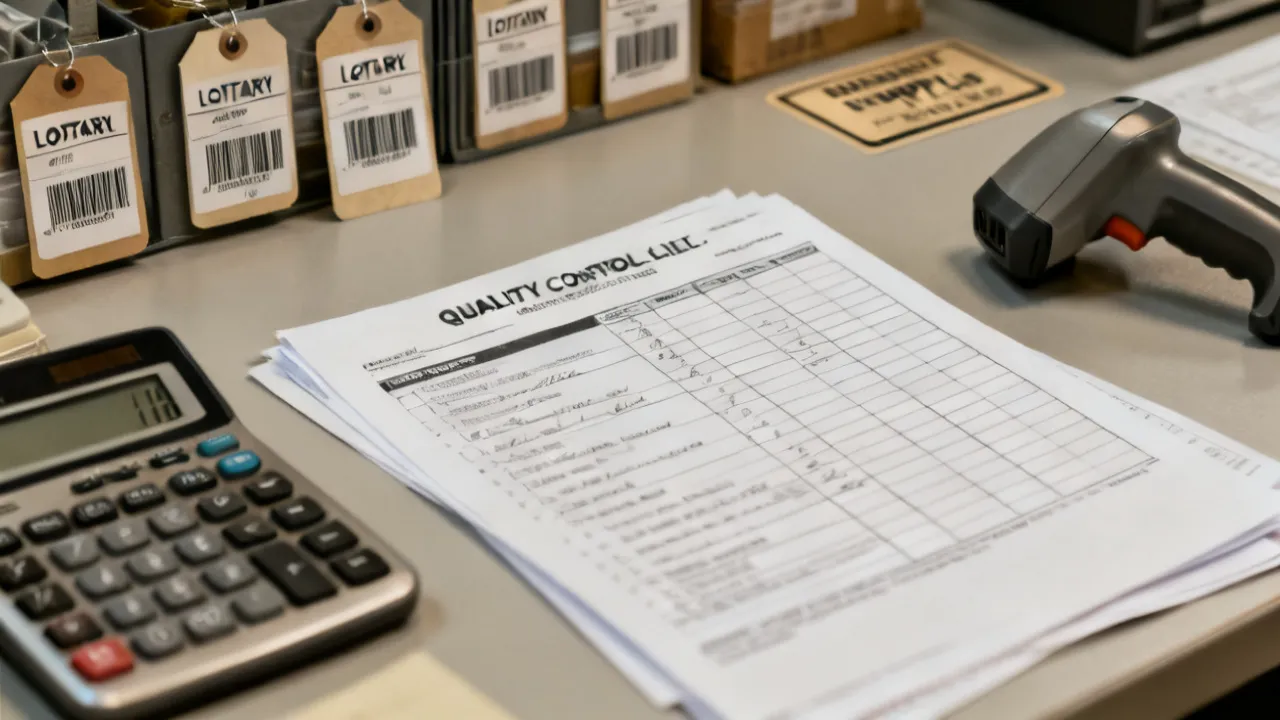
Key Takeaway: Treat Supplier Identifiers as Verification Anchors
In procurement and vendor onboarding, a supplier identifier such as 098.592.294-06 should be approached as a verification anchor—not just a formatting artifact. When teams confirm supplier identity, contract alignment, and document traceability, that identifier becomes the reference point used to reduce mismatch risk across purchase orders, invoices, compliance files, and audit trails. For organizations managing multiple vendors, the core question is consistent: does every downstream process reliably map back to the same verified supplier record tied to 098.592.294-06?
To make this idea practical, it helps to think of the identifier not as a convenient label but as the stable “identity key” that your processes use to decide where money should go, which documents are relevant, which approvals apply, and which regulatory obligations are triggered. When that key is treated casually—entered differently by different teams, stored in inconsistent formats, updated without governance, or replicated across systems without a master record—errors spread quickly. They may not appear until reconciliation time, audit time, or when a compliance request arrives. At that point, the organization must reconstruct facts from fragmented evidence, and the identifier that once acted as a verification anchor becomes a source of uncertainty.
Why Identifiers Like 098.592.294-06 Matter in Procurement
Identifiers in supplier systems often serve three closely related purposes: identity resolution, data governance, and auditability. Even when your internal tools differ—ERP, procurement platforms, document management systems—the underlying operational reality is the same: people make decisions, and decisions must remain consistent with the supplier record used at onboarding. In practice, teams that handle vendor master data need a single source of truth for the identifier stored in the system of record.
From an industry perspective, procurement organizations that mature in governance typically build around a simple discipline: every time a supplier code is referenced, the organization should be able to trace that code back to a validated onboarding file (company registration details, compliance documentation, and the internal approval record). When that linkage is strong, the organization can respond quickly to internal controls checks, customer audits, or regulatory requests without scrambling for justification.
In other words, an identifier like 098.592.294-06 sits at the intersection of operational and financial correctness. Operational correctness ensures that goods and services are delivered by the intended vendor and that service-level responsibilities align. Financial correctness ensures that invoices are matched to the right party, at the right rate, under the right contract. Governance ensures that the identifier is not accidentally “reassigned” through a data update, a duplicate vendor record, or a migration between systems. Auditability ensures you can demonstrate that your process worked the way you said it worked.
Supplier Verification: The Operational Core
Verification is rarely a single event. Instead, it’s a repeatable workflow that runs at onboarding and continues through the supplier lifecycle. For codes like 098.592.294-06, verification typically includes:
- Master-data validation: confirm the identifier matches the intended supplier entity in official or authoritative records.
- Document consistency checks: verify that documents stored in the vendor file align with the same identity reference.
- Workflow approvals: ensure procurement, finance, and compliance stakeholders accept the identifier mapping before transactions proceed.
- Ongoing monitoring: detect changes that could create drift (e.g., address updates, legal entity name changes, banking details changes).
When those elements are enforced, the identifier becomes a stable key used to prevent errors such as invoice-to-supplier mismatches, contract misalignment, or duplicate vendor records that fragment spending visibility.
It’s useful to describe verification as a continuum with different intensities. At onboarding, verification is typically strict: you confirm the supplier identity and the identifier mapping before you allow the vendor to become “active” in transactional systems. During the supplier lifecycle, the verification effort may reduce or change form, but it should not disappear. For example, when a supplier requests a change to banking information, you may not need to fully re-validate the entire corporate identity; however, you still need to confirm whether the identifier mapping remains stable, or whether the request signals a more fundamental identity change.
Verification also needs to account for human behavior. Even when policies exist, mistakes can happen: a new staff member may enter the identifier manually, introduce typos, or apply an incorrect format. Someone might copy the identifier from an email signature that contains formatting artifacts (extra spaces, missing punctuation, or alternative separators). A supplier may submit documents using a different representation than your master data expects. Verification controls should therefore include data normalization, format validation, and a controlled exception process—so that deviations are caught early and handled consistently.
Pricing and Commercial Context: How Verification Protects Total Cost Control
Although the specific price value is not provided here, the commercial logic still applies: procurement decisions are affected by price, but price governance is strengthened when supplier identity is accurate. In other words, verification supports cost control by reducing the likelihood that the organization pays for goods or services under an incorrect vendor identity, or under a wrong contract term set.
In many mature procurement environments, finance teams also monitor variance between expected pricing and invoiced pricing. If supplier identity is unstable, variance analysis becomes less reliable because the system may attribute transactions to the wrong vendor master record. Therefore, even when your organization focuses on cost metrics, the underlying data foundation—anchored by supplier identifiers such as 098.592.294-06—directly influences the quality of financial insight.
Consider how cost control often works in practice. Organizations typically define pricing controls via approved catalogs, negotiated contract rates, master data attributes, and purchasing rules. If your supplier identifier is inconsistent, those controls may not trigger properly. For example:
- A contract is negotiated with one vendor entity, but the purchase order is created under a duplicate vendor record representing the same supplier with a slightly different identifier format. The pricing rule might not link to the contract as expected.
- An invoice arrives referencing a vendor entity identifier that does not match the master record tied to the purchase order. The invoice matching process might create exceptions, delay approvals, or force manual overrides—introducing the risk of paying at incorrect rates.
- Spend analytics attribute transactions to the wrong supplier, resulting in inaccurate visibility into supplier performance, volume commitments, and savings tracking.
Beyond immediate cost impacts, identity drift also undermines strategic procurement decisions. If the organization cannot accurately aggregate spend by supplier, it becomes harder to negotiate based on total volume, to manage consolidated purchasing, or to meet internal targets for preferred suppliers. Supplier verification, therefore, supports not just compliance and audit readiness but also the commercial analytics that leaders rely on to steer sourcing strategies.
Supplier Management Best Practices (Industry-Expert View)
Professionals in procurement operations often emphasize that supplier onboarding is a governance exercise, not only a contracting exercise. From an expert standpoint, the most effective supplier management programs share these characteristics:
- Standardized identity capture at onboarding (the supplier identifier is entered once in a controlled manner).
- Role-based approvals for changes to supplier master data, including the identifier field linked to 098.592.294-06.
- Traceability by design: each vendor record is tied to its approval artifacts and compliance file set.
- Transaction-level alignment: purchase orders and invoices must map to the same verified supplier record.
To build on these best practices, many organizations also implement clear lifecycle states for suppliers. For example:
- Pending Verification (supplier created but inactive for transactions)
- Approved/Active (supplier can be used for purchase orders and invoice processing)
- On Hold (identifier or compliance-related fields require re-validation due to risk signals)
- Inactive/Closed (supplier is no longer used; existing transactions remain for audit trail purposes)
When lifecycle states are implemented, the identifier can serve as the control mechanism that ensures the organization respects those states. For instance, if a supplier requests a change that affects identity-sensitive attributes, the system can automatically move the supplier record to “On Hold” until re-verification is completed. This reduces the chance that procurement teams bypass governance during urgent buying situations.
Another expert practice is exception management. No governance program can prevent every mismatch. What distinguishes strong programs is how they detect, triage, and resolve exceptions. A well-designed exception workflow might route discrepancies to the right group based on severity:
- If an invoice identifier differs only due to formatting (extra dots/spaces), the system can normalize and auto-resolve after a basic format check.
- If the identifier differs materially (different underlying digits or it maps to a different supplier master record), it triggers a manual review with evidence requests.
- If the supplier identity is ambiguous (e.g., similar legal names but different identifiers), it triggers enhanced verification and potentially supplier compliance re-screening.
Compliance, Traceability, and Audit Readiness
Audits typically focus on whether the organization’s processes are consistently executed. With supplier identifiers like 098.592.294-06, audit readiness increases when the organization can show:
- who approved the supplier master record,
- when the approval occurred,
- what documents supported the onboarding, and
- how subsequent procurement transactions used the verified record.
As a general guidance rooted in widely used control frameworks, organizations align their documentation practices with recognized internal control principles and data integrity expectations. For context on audit-related expectations, many teams rely on control concepts described in frameworks such as the COSO internal control framework (Committee of Sponsoring Organizations of the Treadway Commission). For broader data governance and traceability concepts, guidance from established standards and professional bodies is often used as a reference point, especially when defining evidence retention and access controls.
To make this concrete, imagine an audit request: “Show evidence that invoices were paid only to suppliers that were approved and verified.” The organization cannot simply claim approvals occurred; it must link each invoice back to a verified supplier master record. That linkage becomes far more reliable when the identifier 098.592.294-06 is used consistently across systems. Without that consistency, the audit trail can fracture into multiple partial references. Even if approvals exist, the auditor may question whether the approvals correspond to the same entity referenced on the invoice.
Another audit dimension is change control. Auditors frequently look for controls around modifications to master data. If the supplier identifier can be edited without proper authorization, the identifier loses its function as a verification anchor. A fraudulent or accidental change could allow a different entity to be substituted while appearing to retain historical approvals. Therefore, strong controls not only validate the identifier at onboarding but also enforce who can change it later, under what circumstances, with what evidence, and with what downstream updates.
In practice, audit readiness means having the ability to answer questions quickly such as:
- When was 098.592.294-06 captured in the system, and was it supported by onboarding documents?
- Did any system integration alter the identifier representation during data transfer?
- Have there been any subsequent updates to identifier-related fields, and were those changes approved?
- Do purchase orders and invoices reference the same vendor master record tied to the verified identifier?
- Were exceptions handled according to policy, and are those exception records retained?
Step-by-Step Guide: Interpreting and Applying 098.592.294-06 in Supplier Records
Below is a practical workflow you can adapt to your organization. Use it during onboarding, supplier record maintenance, and before approving transactions that depend on verified supplier identity.
While the example identifier is presented as 098.592.294-06, the methodology applies to any structured supplier identifier stored within your systems. The key is to implement an approach that ensures the identifier remains a trusted reference across all stages.
Step 1: Define the Identifier’s Role and Canonical Form
Before operationalizing verification, you need to define what the identifier represents in your context and how it should be stored. “Canonical form” means the system’s preferred representation of the identifier, with consistent formatting and normalization rules.
- Decide whether your systems store the identifier with punctuation (dots/hyphen) or without.
- Define whether spaces are allowed.
- Define how leading/trailing characters are handled.
- Decide whether the identifier field is treated as a pure string or a numeric value (usually string is safer to preserve exact formatting and prevent leading-zero issues).
Then document a single canonical representation for 098.592.294-06. If different departments receive data in different formats, your onboarding workflow should normalize inputs automatically and store the canonical output.
Step 2: Validate at Onboarding Against Authoritative Sources
Onboarding should include validation that the identifier corresponds to the correct supplier entity. Depending on your jurisdiction and supplier registration process, authoritative sources may include government business registries, tax authority records, or regulated supplier verification services.
Validation can be performed in different ways:
- Direct verification: verify the identifier matches the supplier name and legal registration details.
- Document verification: verify that the document set provided by the supplier is consistent with the identifier.
- Cross-field consistency: confirm related fields (legal name, registration address, tax category, or banking beneficiary name) align with the identifier-linked entity.
If your processes do not have access to direct authoritative validation, you can still implement strong document consistency checks. However, those checks should be treated as evidence-based verification rather than a substitute for authoritative identity resolution.
Step 3: Enforce Controlled Entry and Approval Workflow
Controlled entry means the identifier cannot be casually typed in after onboarding or updated without governance. Use role-based controls:
- Restrict who can create new supplier records.
- Restrict who can edit the identifier field.
- Require approvals for changes that affect identity or tax-related fields tied to 098.592.294-06.
Enforce that the identifier value is either:
- captured once at onboarding and locked afterward (common approach for identity key fields), or
- editable only through a change control process that triggers re-verification.
When teams understand that the identifier is a verification anchor, they typically become more careful about entering it accurately and consistently.
Step 4: Link Contract Metadata and Compliance Evidence to the Verified Record
The onboarding identifier should not live in isolation. It should link to:
- contract owner and contract metadata (including supplier entity references),
- compliance and due diligence evidence files, and
- internal approvals and workflow records.
For example, if the supplier contract states the supplier’s legal entity using a defined identity reference, your contract lifecycle management (CLM) tool or contract repository should map that contract’s supplier entity to the same verified vendor master record keyed to 098.592.294-06. This ensures that the contract-to-vendor relationship is auditable and consistent.
Step 5: Align Transaction Processing (POs, Invoices, and Matching Rules)
At transaction time, systems must use the verified supplier record. Purchase orders and invoices should reference the same vendor master data entry that corresponds to 098.592.294-06.
To achieve alignment, implement and test:
- validation rules that prevent creating a PO for a supplier identifier that is not verified or not in the correct lifecycle state,
- matching rules that compare invoice supplier identifiers against the expected supplier record on the PO,
- exception triggers when mismatches occur.
Exception handling should be consistent and evidence-backed. When a mismatch happens, the process should determine whether it is a formatting mismatch (which can be normalized) or a true identity mismatch (which may require escalation and potentially re-verification).
Step 6: Monitor for Drift and Re-Verify When Risk Signals Appear
Ongoing monitoring helps detect drift. Drift may arise from:
- supplier-initiated updates (e.g., legal name changes, banking beneficiary changes),
- system migration issues (e.g., a data integration using a different formatting pattern),
- duplicate supplier creation (two records both appear active, but only one is verified),
- manual edits performed without proper governance.
When a risk signal appears, trigger re-validation. Not every change warrants the same level of re-verification, but identity-sensitive changes should prompt renewed checks and approvals.
Comparison Table: Verification Conditions and Evidence Requirements
| Stage | Condition / Requirement | Evidence to Keep | Quality Check |
|---|---|---|---|
| Onboarding | Supplier identifier field must consistently reflect 098.592.294-06 (or the system’s canonical mapping of it). | Onboarding form, identity documentation, approval record. | Verify that the identifier matches the intended entity reference in your system of record. |
| Master Data Entry | Identifier should be entered through controlled input rules (format checks, no ad-hoc typing without review). | System change log, master-data update approval. | Confirm fields that drive downstream mappings (ERP vendor ID, tax fields, banking references) align. |
| Contract Alignment | Contract terms and supplier identity must reference the same verified record keyed to 098.592.294-06. | Signed contract, contract metadata entry screenshot or record, approval workflow evidence. | Check that purchase order templates select the correct vendor master record. |
| Transaction Processing | Purchase orders and invoices must map to the verified supplier record that includes identifier consistency. | PO and invoice references, reconciliation notes (if applicable). | Perform exception monitoring for supplier mismatches and duplicate vendor records. |
| Periodic Review | Supplier record changes trigger re-validation when identity-sensitive fields are updated. | Periodic review sign-offs, re-verification checklist results. | Confirm no drift exists between the identifier stored and the supported onboarding documentation. |
FAQs
1) What does 098.592.294-06 represent in a supplier context?
In many supplier-data workflows, a structured identifier such as 098.592.294-06 is used to uniquely reference a legal or operational entity within vendor master data. Its exact meaning depends on your organization’s system design, country-specific registration practices, and internal data mapping conventions. The key operational principle is that it should match the verified supplier record consistently across onboarding, contracting, and transaction processing.
2) How should teams handle formatting differences for identifiers?
Teams should apply consistent normalization rules (for example, removing non-essential separators if your system expects a specific pattern) and enforce format validation at data entry. If the identifier is stored in multiple systems, define a canonical representation and document how conversions occur so that 098.592.294-06 remains the same reference point for identity resolution.
3) What are the risks if the identifier is incorrect or inconsistent?
Incorrect mapping can lead to misrouted purchase orders, invoice discrepancies, failed reconciliations, duplicated supplier records, and audit complications. In worst cases, transactions may be attributed to the wrong supplier entity, making compliance evidence harder to defend.
To expand on risk, identity inconsistency can also create operational inefficiencies. For example, if your matching rules cannot confidently associate invoice supplier identifiers with POs, you may experience higher exception rates, more manual interventions, and slower payment cycles. Those delays can strain supplier relationships and increase the likelihood of late payment charges or service disruptions.
4) Does price depend on supplier identifiers?
Directly, not always. However, supplier identifiers strongly influence whether price governance is accurate. If your supplier identity mapping is reliable, variance analysis, contract price checks, and invoice review workflows tend to be more dependable. Inconsistent identifiers can blur these control mechanisms.
5) How often should verification be repeated after onboarding?
There is no single universal interval, but good practice ties re-verification to risk signals and data changes. If fields that affect identity or legal entity alignment change, re-validation is typically warranted. For lower-risk situations, periodic reviews may be sufficient, aligned with your internal control schedule and risk assessment approach.
Organizations often distinguish between:
- Scheduled re-verification (e.g., annual refresh, aligned to compliance cycles), and
- Event-driven re-verification (e.g., when the supplier updates banking details, legal name, or addresses that could indicate entity-level changes).
Both approaches can be used together. Scheduled reviews catch drift proactively, while event-driven checks reduce the time window where outdated identity data could affect transactions.
6) What sources or standards can guide verification and audit readiness?
Many organizations use established internal control concepts from frameworks such as COSO to structure evidence, approvals, and governance. For operational data quality and process discipline, procurement teams often align with professional guidance from recognized auditing and risk management bodies, and they document evidence retention policies accordingly. Always apply sources in a way that matches your jurisdiction and organizational policies.
In addition to COSO-like concepts, teams often consult internal audit methodologies and data governance standards to shape control design. While specific standards vary by industry and geography, the common thread is evidence and repeatability: you want to show that controls are implemented consistently, that roles and responsibilities are clear, and that results (including exceptions) are captured for monitoring.
Industry Context: Where Supplier Identifiers Fit in the Modern Stack
Procurement ecosystems increasingly involve multiple layers: supplier portals, ERP systems, e-invoicing platforms, document repositories, contract lifecycle management tools, and compliance screening services. In such a stack, supplier identifiers act like the glue that keeps records coherent. If 098.592.294-06 is treated merely as a label without validation rules and traceable evidence, integrations may break silently—allowing subtle inconsistencies to persist until an audit or reconciliation reveals them.
By contrast, organizations that design for governance treat supplier identifiers as part of a broader identity and master-data strategy. That means building controls for: who can edit the identifier, what triggers re-verification, how changes are logged, and how downstream systems are updated. This approach doesn’t eliminate all errors, but it narrows the error surface and speeds up resolution when discrepancies are detected.
In modern procurement, the identifier must survive several transformations:
- Supplier data ingestion from a portal (user-entered fields with possible formatting differences)
- Data enrichment through compliance screening tools
- Integration into ERP vendor master data (field mapping, transformation logic, and validation rules)
- Use in purchasing workflows (PO creation templates, vendor selection lists, and buying limits)
- Use in invoicing workflows (OCR extraction, e-invoice parsing, matching algorithms)
- Archival in document repositories (evidence storage and retrieval for audits)
Each transformation can introduce mismatch risk if not controlled. For example, an invoicing platform might strip punctuation from an identifier and store it differently than the ERP expects. If systems are not aligned on canonical format, the same supplier may appear as two different entities within analytics or matching processes. Treating 098.592.294-06 as a verification anchor means you build controls that preserve identity through these transformations.
Data Governance Practices That Support Supplier Verification
Supplier identifiers intersect with data governance in three practical ways:
- Ownership: define which role owns the supplier master record and the identifier mapping.
- Change management: require approvals and evidence for updates to the identifier field tied to 098.592.294-06.
- Quality monitoring: track duplicates, mismatches, and failed mappings across systems.
From an expert procurement standpoint, the goal is not only correctness at the moment of entry. The goal is durability—ensuring the identifier remains reliable as systems evolve and staff changes over time.
Durability requires more than initial onboarding controls. It requires:
- Data lineage: knowing where the identifier came from and how it was mapped into each system.
- Data stewardship: identifying accountable owners for maintaining identifier quality.
- Monitoring metrics: tracking mismatches, duplicate vendor records, exception rates, and time-to-resolution.
- Controlled migrations: during system upgrades, ensuring the identifier’s canonical form remains consistent and validation logic is preserved.
When these governance practices exist, the identifier behaves like a stable key, and analytics and audit trails remain trustworthy.
Common Implementation Mistakes to Avoid
Even strong processes can fail due to operational habits. Common mistakes include:
- Allowing uncontrolled edits to the supplier identifier field after onboarding without re-validation.
- Creating duplicates when vendors request minor changes (e.g., address updates) rather than updating the existing record.
- Skipping cross-system mapping checks during integration testing (ERP vs. invoicing platform vs. document repository).
- Inadequate evidence retention for approvals and verifications, which reduces audit defensibility.
Additional mistakes that often appear in real organizations include:
- Overreliance on manual entry without automated validation and normalization, increasing typo rates.
- Weak duplicate detection logic that fails to merge or link records representing the same supplier.
- Ambiguous escalation paths for identifier mismatches, resulting in inconsistent decisions across teams.
- No periodic audit of data quality, meaning issues remain invisible until they become costly.
Each of these mistakes undermines the identifier’s role as a verification anchor. In the best case, it creates operational friction; in the worst case, it creates compliance risk by weakening the audit trail.
How to Structure Internal Policies Around Supplier Identifiers
To operationalize verification anchors like 098.592.294-06, policies should specify at least the following:
- the canonical data format for identifier storage,
- required approval roles for new supplier creation and identifier changes,
- minimum evidence required for onboarding and periodic reviews,
- rules for handling discrepancies (manual review queues and escalation paths),
- audit evidence retention periods and access controls.
Clear policies make the workflow consistent across regions and teams, even when local operational practices differ.
Policies also benefit from including “decision rules” and “definition of done.” For example:
- Decision rule for edits: if the identifier changes materially, the supplier record must move to “On Hold” and re-verification must be executed.
- Decision rule for formatting differences: if only punctuation differs but the normalized value matches, the record may remain active and the system can update the stored canonical format automatically (subject to governance rules).
- Definition of done for onboarding: a supplier is not active for transactional use until evidence and approvals are complete and mapped to the correct supplier master record.
These rules turn policy from a document into an enforceable operational mechanism.
Notes on Location and Localization
No specific city or country was provided in the keywords. If your organization operates across regions, localization usually affects documentation formats, naming conventions, and the types of authoritative records used for verification. Nevertheless, the underlying principle remains stable: the supplier identifier associated with 098.592.294-06 must map consistently to a verified supplier entity across the organization’s systems.
Localization challenges that frequently affect identifier usage include:
- Different number formatting conventions (e.g., dots vs. spaces, hyphens, or alternate separator characters).
- Different legal entity naming practices, sometimes affecting cross-field consistency checks (name spelling, abbreviations, language variations).
- Different document requirements for onboarding and compliance evidence.
- Different integration expectations in regional systems and e-invoicing specifications.
Because of these variations, the canonical representation and normalization rules become even more important. Without a canonical anchor, localization can inadvertently create multiple representations of the same identifier across systems, leading to drift and mismatch risk.
Reliable References for Control Concepts
For readers seeking conceptual grounding in internal controls and audit readiness, commonly cited sources include the COSO Internal Control—Integrated Framework, which many organizations use to structure control environments, risk assessments, control activities, information and communication, and monitoring. For procurement and compliance implementations, teams also often consult recognized auditing standards and data governance guidance from professional bodies. When you adapt these concepts, ensure they align with your jurisdiction’s regulatory expectations and your organization’s internal policies.
To make control concepts actionable for supplier verification, map the framework components to practical procurement controls:
- Control environment: define roles, responsibilities, and governance culture around supplier master data and verification.
- Risk assessment: identify mismatch risks (duplicate vendors, identity drift, unauthorized edits) and prioritize controls accordingly.
- Control activities: implement validation rules, approvals, evidence requirements, and system safeguards around 098.592.294-06.
- Information and communication: train procurement and finance teams on correct identifier handling and escalation processes.
- Monitoring: measure exception rates, duplicate vendor counts, and time-to-resolution for identifier mismatches.
When these controls are designed and monitored, the identifier becomes a stable and verifiable part of the organization’s control system—rather than a passive piece of data.
Conclusion: Build Trust Through Consistency
Identifiers such as 098.592.294-06 are most valuable when used as verification anchors. When procurement teams apply consistent master-data governance, require evidence-backed approvals, align contracts and transactions to the same verified record, and monitor for drift, the organization gains audit readiness and stronger commercial control. In a supply chain environment where errors can propagate quickly, disciplined supplier identity practices remain one of the most cost-effective ways to protect both operational reliability and financial integrity.
Ultimately, the best verification programs treat supplier identifiers as a system-level truth: a single identity reference that connects onboarding evidence to ongoing transactions. When that truth is consistent, procurement becomes more efficient, finance becomes more confident, and audits become less stressful because the organization can show the “why” and “how” behind each payment. When that truth is inconsistent, procurement and finance spend disproportionate time untangling mismatches—time that could have been spent sourcing, negotiating, and improving supplier performance.
So the practical directive is straightforward: make sure that every time your systems encounter 098.592.294-06, it maps back to the same verified supplier record, supported by approvals and traceable documents, and protected by controls that prevent drift. That consistency is what turns an identifier into an anchor—and an anchor into reliable governance.
-

A Guide to Cost-Efficient Small Electric Cars for Seniors
-
Mastering Debt Consolidation: Boost Your Credit Score and Manage Interest Rates
-
Your Guide to Loans, Credit Checks, and Interest Rates
-
Affordable Independent Living: Finding the Right Senior Housing
-
Guide to Senior Living Apartments: Affordable and Comfortable Environments