Understanding Supplier Sourcing and Pricing Identifiers
This guide explains how to interpret supplier identifiers and pricing signals to support safer procurement decisions. It provides objective background on common industry practices tied to identifiers like 85991340360 and how businesses evaluate product consistency, documentation, and transaction terms. The article emphasizes due diligence, requirements, and practical screening steps.
Critical overview: what identifiers and pricing signals mean for sourcing
When a procurement team encounters an identifier such as 85991340360 alongside other supplier references (including the placeholder keywords provided), the immediate priority is to understand how the number is used and what it connects to—for example, an internal catalog code, a compliance reference, a logistics tag, or a warehouse item marker. In parallel, any price information you receive should be treated as a negotiation input, not a guarantee of quality. From an industry perspective, the most reliable outcomes come from linking each identifier to verifiable documentation (purchase terms, batch/lot traceability where applicable, specification sheets, and delivery conditions), then validating that the supplier’s stated price aligns with those specifications and operational constraints.
Because your provided keywords do not include explicit location text (and no valid city/country placeholders appear in them), this article remains generally applicable for sourcing teams operating in typical commercial contexts. If you later share a specific city or country, the same sourcing framework can be localized with local regulatory and logistics norms.
Even when the identifier looks straightforward—just a long number—the practical meaning often varies by organization. Some suppliers embed meaning into the digits (such as product family, manufacturing line, or packaging configuration). Others simply use the number as a database primary key. The procurement challenge is that both systems can look equally opaque to an outside buyer, and the wrong assumption can create downstream failures: receiving the wrong variant, rejecting shipments due to missing documentation, or discovering after payment that the price reflected a different package size or spec level.
Therefore, professional sourcing teams treat identifiers and price quotes as part of a single “evidence chain.” The identifier should connect to the same item description, the same documentation package, the same acceptance criteria, and the same logistics/receiving record. If any link is missing or inconsistent, the quote may still be usable—but it becomes a controlled risk rather than a straightforward procurement action.
Key context: why supplier identifiers exist and how they reduce risk
Identifiers like 85991340360 are rarely “random.” In procurement workflows they commonly serve one or more functions:
- Catalog or SKU mapping: enabling order automation so the exact product/variant is selected.
- Lot/batch traceability: supporting recall processes and quality investigations.
- Documentation linkage: tying a commercial offer to a technical datasheet, test report, or compliance file.
- Logistics routing: helping warehousing systems and carriers manage inventory movement.
- Accounting and billing references: simplifying reconciliation between invoices and receiving records.
For sourcing professionals, the goal is not simply to “collect” identifiers, but to confirm their meaning. A correct interpretation prevents two common failures: (1) ordering the wrong variant under an ambiguous code, and (2) accepting pricing that reflects a different specification than what the identifier actually denotes.
It can help to think of identifiers as the procurement equivalent of a “cross-reference key.” Your internal system likely uses its own item master codes. The supplier uses theirs. Logistics systems use barcodes, pallet labels, and shipment references. Quality systems use batch/lot and certificate numbers. Accounting systems use invoice line references. When these systems align properly, procurement becomes faster and less error-prone. When they do not align, the buyer must do manual reconciliation—an error-prone, time-consuming activity that can create avoidable disputes.
To see why this matters, consider the following realistic scenario. A buyer sees 85991340360 in a quotation and assumes it is a catalog SKU. The buyer places a purchase order with that SKU and expects the same spec as the last order. However, the supplier later ships a different sub-variant under the same “internal mapping” number, because the supplier’s system uses that field to represent a warehouse location rather than the technical specification. The receiving department checks the packing list and notices the delivered variant does not match the expected spec. The buyer then has to initiate a nonconformance process, possibly reject goods, or accept them conditionally—each path affecting cost, schedule, and compliance posture.
Another scenario: 85991340360 is actually a compliance document reference (e.g., a declaration or certificate ID). The supplier quotes a price that includes documentation, but the buyer’s receiving process expects the certificate number to appear in a specific field on the packing list. If it does not, the buyer may not be able to close audit requirements, even if the physical goods are correct. These are not just administrative problems; in regulated procurement categories they can delay payment or create compliance exposure.
Pricing signals: how to evaluate “price information” without relying on assumptions
Price information is meaningful only when it is contextualized. In many industries, two suppliers may quote similar unit costs while differing in packaging size, grade/spec level, tolerance ranges, warranty terms, lead times, freight responsibility (Incoterms), or minimum order quantities. Therefore, an industry-standard approach is to ask:
- What exactly is included in the price? (materials, handling, documentation, testing, certifications, packaging)
- What is the pricing basis? (per unit, per weight, per batch, per project milestone)
- Are there price tiers? (volume brackets, seasonal adjustments, currency conversion)
- What does the quote reference? (the same identifiers such as 85991340360, and consistent item description)
- What is the delivery and acceptance structure? (incoterms, lead time, inspection criteria)
If the quote includes any supplier references matching the provided keywords (including the placeholders), treat them as fields to validate. You want the identifier(s) to reconcile across your documents: purchase order, packing list, invoice, and receiving report.
A common mistake in procurement is to treat unit price as the only economic signal. In reality, procurement economics are shaped by the total cost of fulfillment and the cost of risk. For example:
- Documentation cost (certificates, test reports, compliance statements) can be included or charged separately.
- Packaging and labeling may change depending on regulatory needs and warehouse requirements.
- Freight and risk transfer can shift costs between buyer and supplier depending on Incoterms and shipping mode.
- Quality acceptance outcomes affect the cost of nonconformance handling, reshipment, and delays.
- Payment terms affect working capital; a slightly higher price may be preferable if it enables better payment schedules.
Thus, when you see price information associated with an identifier like 85991340360, you should treat it as a “hypothesis” about the deliverable. The correct procurement action is to convert the hypothesis into verifiable evidence: confirm the identifier meaning, confirm the spec, confirm the documentation, and confirm that the same identifier appears consistently in the delivery and invoice cycle.
In practical terms, procurement teams often ask suppliers to confirm the quote using a structured quotation template. That template typically includes: SKU/identifier, full item description, spec/grade/variant, packaging configuration, quantity, unit price, currency, any surcharges (hazmat, expedited freight, documentation fees), lead time, Incoterms, warranty/return terms, and an explicit list of documents to be delivered.
If suppliers cannot or do not provide structured confirmation, the buyer may still proceed, but then they must allocate more internal resources to manual verification and acceptance. This is exactly the kind of “risk trade” professional procurement should manage explicitly rather than implicitly.
Supplier due diligence: practical screening steps that procurement teams can apply
To support reliable sourcing, professional teams typically run a due diligence cycle. While the specifics vary by sector, the logic stays consistent: confirm the supplier’s capability, confirm the product’s conformance, and confirm the transaction’s feasibility.
1) Verify identifier meaning before placing an order. Ask the supplier to define how 85991340360 is used: is it an internal SKU, a batch code, a compliance ID, or a catalog mapping key? Request a document that shows the same identifier in context (e.g., commercial offer, packing list template, or product specification sheet).
2) Validate specification alignment with the quote. Compare product descriptions across all paperwork. If the identifier corresponds to a certain grade, finish, tolerance, or formulation, ensure the quote’s pricing reflects that exact grade/spec—not a “best effort” substitute. If possible, request a technical datasheet or specification that explicitly references that identifier.
3) Confirm documentation quality and consistency. Request relevant documents (for example, certificates of analysis, test reports, quality management statements, or manufacturing records) depending on your industry. The objective is traceability and audit readiness. A recurring procurement failure is when documentation arrives but does not match the goods shipped—such as certificates that reference the wrong lot number or mismatch the declared batch.
4) Assess operational reliability. Evaluate lead times, production capacity signals, and fulfillment patterns. If a supplier has short lead times but inconsistent documentation, that mismatch is a risk marker. You should look not only at stated delivery dates but also at historical on-time delivery, documented communication quality, and performance during change requests.
5) Confirm transaction terms. Prices can be impacted by payment terms, returns policy, warranty coverage, and inspection rights. Procurement professionals avoid “hidden risk” by clarifying acceptance criteria and dispute resolution. A cheap unit price can become expensive if the buyer loses the right to reject nonconforming goods quickly or if delays push production schedules downstream.
6) Evaluate change control maturity. Many procurement categories involve ongoing manufacturing changes: raw material updates, process tuning, supplier substitutions, and packaging modifications. Ask how changes are communicated and approved. You want to know whether 85991340360 will remain stable across changes or whether it will change with each variant.
7) Confirm quality escalation mechanisms. If issues arise, how does the supplier handle them? Do they provide corrective and preventive action documentation? Is there a defined escalation path and turnaround time for responding to nonconformances?
In due diligence terms, these questions protect your organization from “process risk” as much as “product risk.” Process risk includes the possibility that the supplier can deliver the right goods once, but cannot reliably deliver them with the documentation and conformance behavior your operation needs.
Industry perspective: what tends to go wrong in sourcing projects
Across manufacturing, distribution, and many B2B service procurement scenarios, the most common issues include:
- Identifier ambiguity: the code is used differently across documents.
- Specification drift: vendors quote one spec but ship another—sometimes due to variant confusion.
- Pricing inconsistency: unit price appears stable, but total cost changes due to packaging, freight, or documentation fees.
- Weak acceptance criteria: no clear inspection standards, resulting in disputes at receiving.
- Insufficient traceability: no batch/lot tie-in, making quality investigations difficult.
By contrast, stronger projects typically show a disciplined documentation chain: every reference you receive—such as 85991340360—is used consistently and can be traced from quote to delivery.
It’s useful to break these failure modes into three procurement layers:
Layer 1: Commercial layer (quote and pricing). Here, failures often involve mismatched inclusions, currency or tax confusion, and inconsistent naming. For example, two quotes may both list “unit price,” but one includes documentation fees while the other lists them separately. Or a quote may assume a packaging configuration that differs from your receiving operations.
Layer 2: Technical layer (spec and conformance). Here, failures involve wrong grade, tolerance mismatch, or incorrect formulation. Identifiers help, but they only help if the identifier is tied to the technical spec. If it is only a warehouse reference, the buyer must not treat it as a technical assurance.
Layer 3: Operational layer (delivery, acceptance, traceability). Here, failures involve incorrect shipment documents, missing labels, non-appearing lot numbers, or incomplete paperwork at delivery time. Even if the physical goods are correct, weak operational documentation can stall receiving and block downstream use.
Professional sourcing manages all three layers, using identifiers like 85991340360 as the “glue” that connects commercial terms, technical specs, and operational reality.
Comparison table: selecting a sourcing approach and the conditions to meet
The table below compares common procurement approaches. It is designed to help you decide how to handle identifiers like 85991340360, price information, supplier documentation, and requirements in a structured way.
| Approach | When it’s a good fit | Conditions/requirements | Risk level if requirements are not met |
|---|---|---|---|
| Direct supplier order with full document reconciliation | When specifications are stable and you can validate paperwork alignment | Supplier must define the identifier meaning (e.g., 85991340360), provide consistent item descriptions, and support receiving documentation matching the quote | Lower—if traceability and acceptance criteria are enforced |
| Multi-supplier comparison based on standardized RFQ | When you need competitive pricing while preserving specification fidelity | RFQ must standardize what’s included in price; require each supplier to reference the same identifiers and provide comparable documentation | Medium—if cross-supplier comparisons mix different specs |
| Pilot batch or sample validation before volume purchase | When you cannot fully validate conformance upfront | Define acceptance tests; require supplier to use the same identifier and batch linkage for the pilot; ensure the test results tie back to the identifier | Medium to lower—if testing and traceability are strict |
| Distributor channel procurement | When you need speed or localized fulfillment | Distributor must pass through accurate manufacturer identifiers; confirm that price includes required documentation and that the identifier mapping remains consistent from distributor to product | Medium—if pass-through documentation is incomplete |
Choosing the right procurement approach is not only about speed and cost; it is also about how confidently you can build the evidence chain around identifiers and pricing. A direct supplier order can be low risk when you can confirm that 85991340360 and the item description remain consistent across all documents. Multi-supplier RFQs can reduce price but increase the chance of spec mismatch unless the RFQ template is strict and each supplier confirms equivalence using the same identifiers and the same specification references.
Pilot-based sourcing can be a strong compromise in uncertain categories. It allows testing and traceability validation before full scale purchase. However, it requires disciplined test planning and explicit linkage between sample test results and the identifier and batch delivered.
Distributor procurement can be beneficial for lead-time reasons, but it adds a layer where identifier mapping might be altered. The key condition for distributor channels is that the distributor’s documentation must remain consistent with the manufacturer’s identifiers. Otherwise, the buyer might buy “the right product” but not be able to prove it easily during audits.
Reliable sourcing sources and what to consult
Procurement teams often support their decisions with widely used industry guidance and frameworks. For example, quality and vendor management practices are commonly aligned with standards and best-practice guidance such as:
- ISO 9001 (quality management systems) for how suppliers manage quality processes.
- ISO 13485 where medical device contexts apply.
- OECD Due Diligence Guidance where risk management and responsible sourcing frameworks are relevant.
- Local trade and consumer regulations relevant to labeling, documentation, and dispute handling.
For any compliance-sensitive sourcing, consult the relevant standard bodies and your organization’s legal/compliance department. This ensures your requirements and audit expectations are grounded in recognized frameworks rather than informal claims.
Beyond formal standards, sourcing teams can also consult internal policies and procurement governance documentation. For instance, many organizations have templates for vendor onboarding, quality clause libraries, and nonconformance handling procedures. These internal tools help ensure that when suppliers provide identifiers like 85991340360, the buyer’s procurement and quality departments interpret and enforce them consistently.
In certain regulated industries, the identifier might have special meaning. For example, in medical device supply chains, traceability requirements can demand that batch/lot numbers appear on packing slips and certificates. In such cases, “identifier” may not be just an internal code; it may have regulatory significance. Understanding whether 85991340360 is a regulatory traceability reference versus a commercial SKU is essential.
In addition, some jurisdictions have specific requirements for labeling language, hazard communications, and documentation retention. Even when a buyer is sourcing globally, they must ensure that delivered goods meet the destination’s obligations. Hence the earlier note about localization: once city/country details are known, the procurement requirements can be mapped to the destination market.
Step-by-step guide: turning identifiers and quotes into procurement actions
Below is a practical, step-by-step method for handling supplier identifiers and pricing information in a way that professional buyers can scale across categories.
Step 1: Capture every reference exactly as provided. Include the identifier (e.g., 85991340360) and any supplier references embedded within the keywords you received. Record how the supplier describes each field.
Step 2: Request a definition for the identifier. Ask: what entity does 85991340360 represent (SKU, batch, compliance ID, or internal mapping key)? Request a document that shows it in context.
Step 3: Normalize the product description. Ensure the item name, variant, and specification are explicitly written in your purchasing document. Avoid descriptions like “same as previous” unless you attach a formal specification sheet.
Step 4: Reconcile the quote with the identifier. Confirm that the quoted price corresponds to the same item description tied to 85991340360. If the quote uses different wording, ask for clarification before purchase.
Step 5: Define acceptance criteria. Specify what “conformance” means at receiving—documentation checks, quantity verification, labeling verification, and any technical inspection relevant to your sector.
Step 6: Establish delivery responsibility and payment terms. Ensure the price information includes what must be included (packaging, documentation, and transport scope). Clarify lead time and the handling of delays.
Step 7: Require traceability evidence at delivery. The identifier should appear on the packing list and/or shipping documents in a way that can be matched to your order record.
Step 8: Close the loop with post-receipt records. After receiving, update your internal system with the confirmed mapping of the identifier to the delivered product. This improves the next purchase cycle and reduces future ambiguity.
To strengthen this method, consider adding three “quality gates” that procurement can implement between the steps:
- Gate A (Pre-PO): Ensure the identifier meaning and product spec are confirmed in writing. If not, escalate internally or pause purchase order creation.
- Gate B (Pre-shipment): Require supplier confirmation that the batch/lot (if applicable) and the documentation package match the order. Ask for pre-shipment document review when feasible.
- Gate C (Post-receipt): Confirm that the goods received and documents received match exactly what the identifier indicates. If discrepancies occur, record them and feed them into a vendor scorecard.
These gates do not necessarily slow procurement; they shift effort earlier into prevention. In practice, prevention often costs less than remediation.
Another useful enhancement is to require a “quote-to-PO mapping statement.” Some organizations request suppliers to confirm, in their quote response, that each quoted line item maps to a specific buyer requirement. When this mapping includes an identifier like 85991340360, it becomes easier to defend procurement decisions if later disputes arise.
Practical procurement conditions and requirements checklist
Procurement teams typically use a checklist to ensure nothing is missed. Use this as a baseline when you see identifiers like 85991340360 and accompanying price information:
- Identifier mapping: supplier can define the meaning of the identifier and shows it consistently in documents.
- Quote-product alignment: the item description in the quote matches the identifier-linked specification.
- Documentation package: includes the documents needed for inspection, warranty handling, or compliance review.
- Delivery terms clarity: who pays for transport, who handles risk transfer, and what the lead time assumptions are.
- Acceptance criteria: objective checks at receiving with a defined resolution path for discrepancies.
- Change control: supplier confirms what happens if the specification or packaging changes before shipment.
To make the checklist more operational, procurement teams often add “evidence requirements” that specify what proof should be provided and when. For example:
- Before shipment: offer to review certificates/test reports or at least require pre-shipment document notification and filenames/reference numbers.
- At shipment: require that the packing list includes 85991340360 (or the relevant identifier) in a specific field and that shipping labels match the order line.
- At receiving: require that receiving staff can locate documents quickly and link them to the purchase order and identifier using a documented method.
Procurement should also define the resolution process. If the supplier sends a document that references the wrong identifier, the buyer needs a clear policy: do you reject the shipment? Do you hold shipment acceptance until corrected paperwork arrives? Who approves acceptance under exception?
These policies are important because, without them, teams fall back to subjective decisions—often causing inconsistent outcomes across time, products, or supplier relationships.
FAQs
1) What does an identifier like 85991340360 usually represent?
In many procurement contexts, a number such as 85991340360 can function as a SKU/catalog code, a logistics reference, or a documentation linkage key. The exact meaning must be confirmed by the supplier through written definitions and document examples.
However, “usually” is not enough for sourcing decisions. The procurement best practice is to request a short mapping explanation that states: (a) what it identifies (product vs batch vs documentation), (b) which documents carry the identifier, and (c) whether the identifier changes when the product spec changes or when packaging changes.
2) How should I verify that the quoted price matches the correct product?
Reconcile the quote’s product description with the identifier mapping. The identifier (e.g., 85991340360) should appear consistently across the quote, purchase order, packing list, and invoice, and the specifications should match the deliverable.
Additionally, verify the “economic inclusions” portion: packaging format, documentation scope, delivery charges, and any surcharges. A quote can match the correct product description and identifier but still not match your true total cost if, for example, the quote includes less documentation than required or excludes freight/handling.
3) Are supplier identifiers enough to ensure quality?
No. Identifiers help with traceability and ordering accuracy, but quality assurance requires conformance documentation, inspection/acceptance criteria, and—where relevant—test reports or certificates consistent with the product and its intended use.
Think of identifiers as a locator, not a guarantee. The guarantee comes from meeting defined specs and acceptance criteria. A strong identifier scheme can enable faster recalls and investigations, but it does not replace technical conformity.
4) What if suppliers give different meanings for the same identifier?
That is a risk flag. You should pause ordering and request clarification. If the supplier cannot provide consistent definitions and examples, consider a pilot batch with defined acceptance tests or switch to a supplier that can demonstrate documentation consistency.
In more mature vendor management programs, inconsistencies in identifier meanings are tracked as a nonconformance category. Over time, you can use this data to prioritize corrective actions or requalify the supplier.
5) How can I reduce procurement disputes related to deliveries and pricing?
Use objective acceptance criteria, define delivery responsibilities clearly in the purchase terms, and ensure price information is tied to the same specifications and identifiers. Keep a reconciliation record that links every document to the same item references.
Another tactic is to require supplier confirmation of line items in writing. If a dispute arises, both parties can refer to the initial quote and its stated mapping for the identifier like 85991340360.
6) Does this approach apply across industries?
The framework—identifier validation, price-context reconciliation, documentation checks, and acceptance criteria—applies broadly. Specific documents and standards vary by sector, so align requirements with relevant regulations and recognized quality management frameworks.
In services procurement, identifiers might refer to contract codes, deliverable codes, or invoice line references. The same principle holds: the identifier must map consistently to the deliverable and the acceptance process.
7) Can you incorporate our supplier name, location, or product description later?
Yes. If you share the missing location details (city/country) and actual product category, the guidance can be localized with typical regional documentation expectations and operational practices.
Localization can include: required labeling language, mandatory certificates for import/export contexts, and standard receiving workflows at your destination facility. Each of these affects what documentation must accompany the shipment and how acceptance criteria should be written.
Conclusion: disciplined validation turns sourcing inputs into dependable outcomes
Identifiers such as 85991340360 and accompanying price information are not just administrative details—they are anchors that connect your quote to the exact deliverable. For best results, sourcing teams should treat these inputs as starting points for verification: confirm the identifier meaning, reconcile specifications, require traceability evidence, and enforce acceptance criteria. When these steps are applied consistently, procurement decisions become more defensible, disputes decline, and supply continuity improves.
Ultimately, the practical objective is simple: every purchased item should be “proven” to match the ordered requirements. Identifiers provide the pathway to prove it, but only when you require the supplier’s documents and operational behaviors to align with the identifier’s stated meaning. When procurement treats identifiers and pricing as an integrated evidence chain, organizations gain speed through reduced rework—because each transaction becomes easier to validate at receiving, easier to audit later, and easier to improve over time through structured feedback loops.
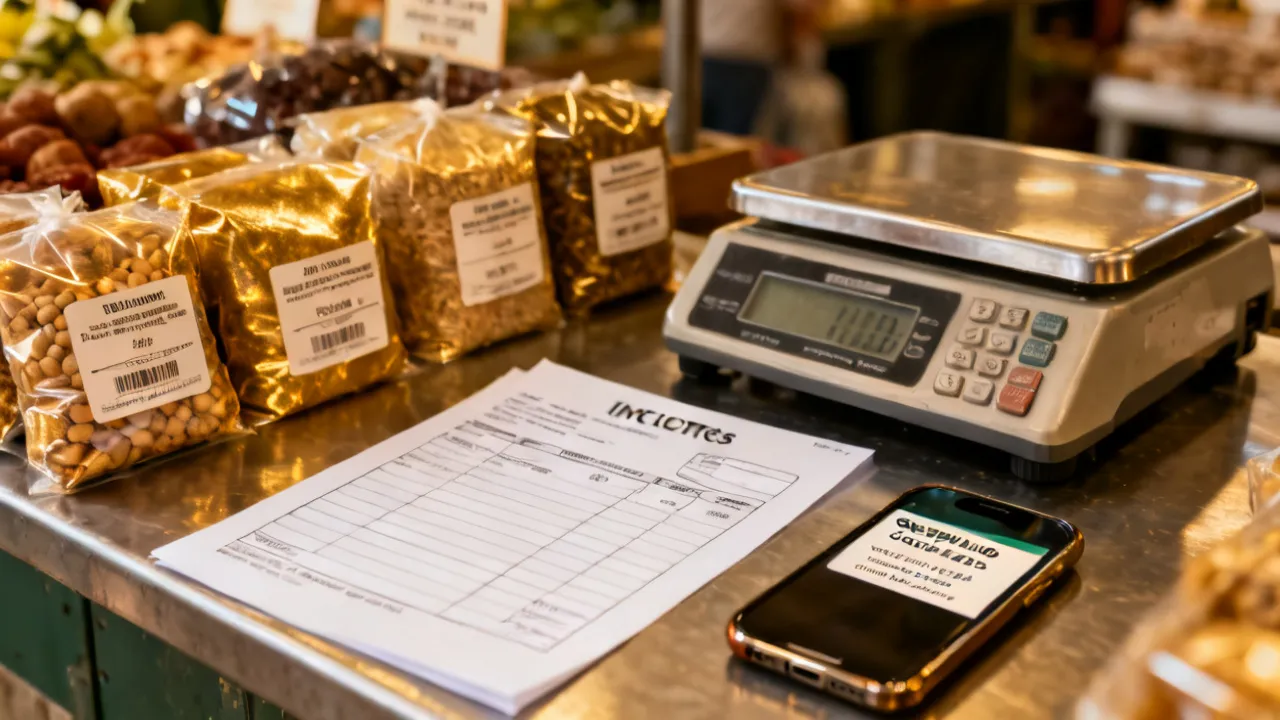
cover_image_prompt (English text-to-image): Professional close-up photo of an industrial-style marketplace counter with labeled packaged goods, a clean invoice document, a digital scale, and a smartphone showing a supplier contact card; warm natural lighting; realistic style; high detail; no visible brand logos; shallow depth of field; English signage only
-

A Guide to Cost-Efficient Small Electric Cars for Seniors
-
Mastering Debt Consolidation: Boost Your Credit Score and Manage Interest Rates
-
Your Guide to Loans, Credit Checks, and Interest Rates
-
Affordable Independent Living: Finding the Right Senior Housing
-
Guide to Senior Living Apartments: Affordable and Comfortable Environments