Understanding Pix9691133599: Marketplace Quality and Use
This guide explains Pix9691133599 by breaking down how buyers typically evaluate item authenticity, specifications, and supplier reliability in modern marketplaces. Background information covers what the keyword likely represents in trade contexts, how evaluation criteria work, and why documentation, verification routines, and after-sales terms matter for informed purchasing decisions.
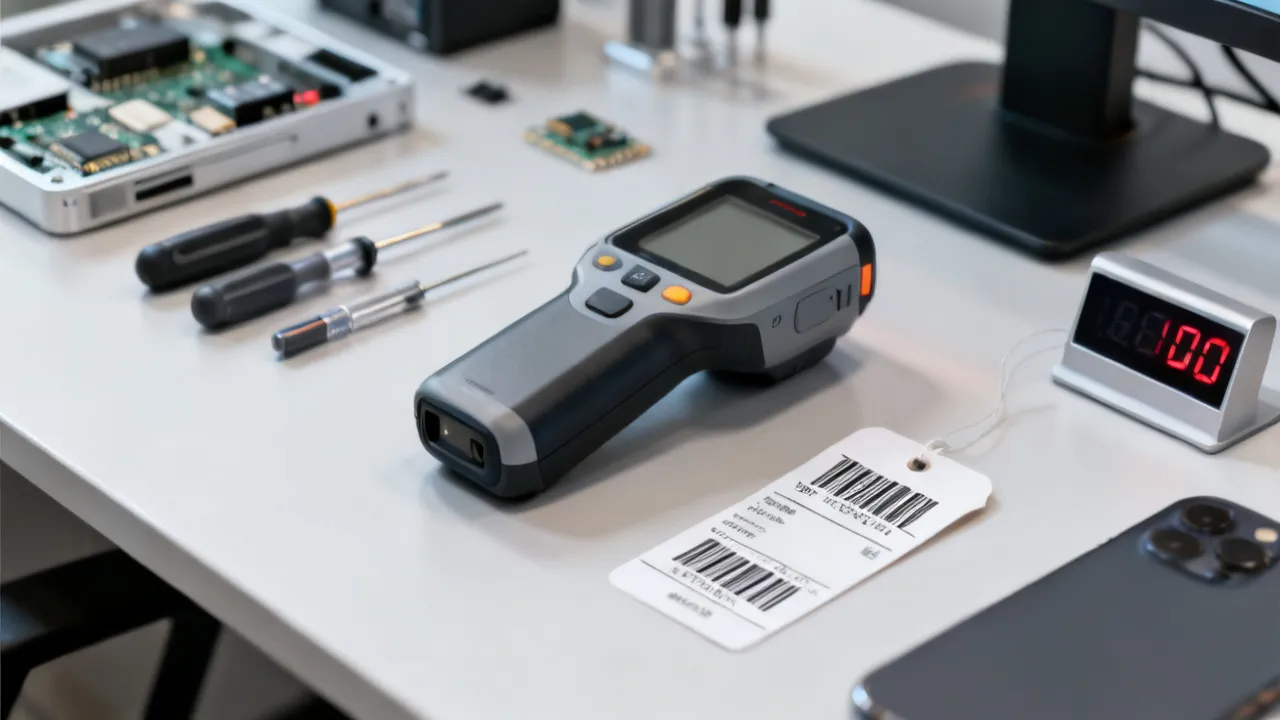
Most Important: How to Evaluate “Pix9691133599” Responsibly
When you encounter “Pix9691133599” in a marketplace context, the most practical goal is to confirm what the identifier refers to—such as a product SKU, listing code, batch reference, or internal catalog number—and then assess the seller’s credibility using verifiable signals. In an industry where listings can be reused across time, careful checks around documentation, inspection, and post-purchase conditions are the difference between a smooth transaction and a frustrating mismatch.
Objectively, “Pix9691133599” should be treated as a reference token until proven otherwise. That means you compare the code against the supplier’s stated specifications (model, revision, compatibility details, packaging contents) and request evidence when anything is ambiguous. Rather than focusing on “what sounds good,” focus on what can be verified: serial/batch labeling, photos of the actual item, compliance statements where applicable, and clear return or dispute procedures.
Responsible evaluation also involves a mindset shift: you are not trying to “decode” the identifier through guesses. You are trying to establish a reliable chain of information from (1) the listing and its claims, to (2) the physical item you will receive, to (3) the policies that govern what happens if something is wrong. If you do that systematically, you substantially reduce the risk of compatibility errors, missing accessories, condition surprises, and refund delays.
Because “Pix9691133599” could appear in multiple contexts—sometimes alongside electronics, sometimes alongside consumables, spare parts, accessories, or bundled kits—you should avoid assuming that the same code always maps to the same physical contents across sellers. In many supply models, a code is meaningful within a seller’s internal system, but not universally interpretable by buyers. Your responsibility as a buyer is therefore to demand clarity from the seller: what exactly the code corresponds to, which revision it represents, and what the box includes.
Equally important, responsible evaluation includes understanding the boundaries of buyer protection. Even when a marketplace offers dispute mechanisms, resolution often depends on whether you can show objective mismatch (photos, labels, serials, or documented defects), whether you complied with return requirements, and whether the seller’s policies are clear and consistent. The best time to gather clarity and evidence is before purchase, not after.
Why Keywords Like “Pix9691133599” Appear in Listings
Marketplace keywords often function as searchable anchors. Codes such as “Pix9691133599” may help sellers categorize items by internal taxonomy or by a stable listing identifier. While the exact meaning depends on the seller’s system, the objective pattern is consistent: a code improves discoverability and reduces typing errors when multiple variants exist (for example, different revisions, capacities, bundles, or manufacturing runs).
In practice, buyers benefit from treating a code as the start of verification, not the end of decision-making. Even if two listings share similar text, the underlying items can differ by revision, firmware generation, included accessories, or manufacturing date.
It is also worth recognizing why sellers use such codes. Many sellers are managing inventory across warehouses, suppliers, or refurbishment lines. A human-friendly product name (e.g., “Model X accessory”) can remain stable, while a code tracks a specific stock rotation. If the seller does not clearly map the code to the physical item, buyers should not assume that the mapping is obvious.
Sometimes “Pix9691133599” may be associated with a particular batch of goods. In that case, the code could reflect differences in packaging inserts, region labels, or compliance paperwork. Other times, it can be a SKU that changes when firmware or hardware revision changes. In still other cases, it could be a “listing ID” rather than a product identity code—meaning it might not guarantee that the contents remain identical to a previous buyer’s experience.
Responsible shopping therefore includes asking whether the identifier “locks” the contents or whether the seller might substitute equivalent parts. For high-stakes compatibility (industrial equipment, legacy systems, safety-related components, or time-sensitive repairs), you should aim for a non-substitutable confirmation: “This code corresponds exactly to this revision and includes exactly these accessories.” If substitution is possible, you need written disclosure and a clear policy on replacements.
What Buyers Should Confirm Before Purchasing
From an industry-expert perspective, evaluation should follow a checklist mindset. Here are the highest-impact confirmations to reduce risk when a listing includes “Pix9691133599”:
- Exact product identity: Does the supplier confirm the code maps to a specific model, revision, or SKU?
- Specification alignment: Compare stated technical details against your requirements (compatibility, dimensions, material, interface, operating limits—depending on what the item is).
- Included components: Ensure the description matches the real contents (cables, accessories, manuals, mounting parts, packaging type).
- Condition and handling: New vs. refurbished, warranty coverage, and whether the item has been tested.
- Traceability: Look for batch/lot references, serial-number ranges, or inspection documentation where relevant.
- Return and dispute process: Make sure the supplier clearly states how problems are handled (dead-on-arrival, missing parts, mismatch).
To make these confirmations more actionable, treat them like requirements you would write for a procurement request. For example, instead of asking “Is it compatible with my device?” ask “Which revision is this unit, and what interface/standards does it support?” and “Can you provide documentation or label photos that show the revision and compatibility details for the specific unit associated with Pix9691133599?”
Also, consider the “failure modes” most likely for your item category. If “Pix9691133599” is a component that plugs into a system, the failure mode might be electrical incompatibility, incorrect connector type, wrong voltage range, or missing firmware configuration. If it is an accessory or kit, the failure mode might be missing parts, incorrect packaging, or absence of required documentation. If it is a device itself, the failure mode might be cosmetic condition, internal defect, or battery health (if applicable). Your checklist should match those failure modes.
One underrated confirmation step is to ask whether the seller can provide a photo of the actual label or packaging for the unit that will be shipped. Sellers sometimes use stock images; if they do, ask them to confirm whether the shipped unit is from the same batch and to show the relevant label or proof of inspection. The goal is not to interrogate; it is to establish objective traceability.
Pricing Context: How Buyers Should Read Price Information
You may also see price information alongside “Pix9691133599” in listings. Because no specific price was provided here, the most reliable approach is to analyze pricing as a relative signal rather than an absolute truth. In many e-commerce and B2B supply contexts, price can vary due to:
- Seller tier and inventory sourcing (direct stock vs. distributor vs. brokered supply)
- Unit packaging and included accessories
- Warranty length and test/inspection standards
- Geographic shipping lanes and import handling
- Revision differences hidden behind similar descriptions
Objectively, when a price is significantly lower than comparable verified listings, it is a cue to ask more questions—not a reason to assume the item is correct. A credible supplier can explain what is included and how the item meets the stated specification.
It can also be useful to evaluate price in terms of “total cost of ownership,” even for straightforward purchases. Total cost includes shipping cost, return shipping cost (which can be significant), downtime costs (especially for repair or installation), potential reordering if incompatible, and the likelihood of dispute resolution. A slightly higher price from a seller who provides stronger traceability, clearer return policies, and documented condition may be the cheaper option after considering the risk of mismatch.
In addition, watch for pricing signals that often correlate with substitution or missing accessories. For instance, if a listing is cheaper and says “compatible with,” rather than “for your model,” that language may indicate flexible substitution. If the listing does not explicitly list accessories, it may not include the full kit. If the listing includes vague condition descriptions (“like new” without testing notes), it may not guarantee performance. While such patterns are not proof of fraud, they are patterns that increase the likelihood of mismatch and therefore deserve additional verification.
When you compare sellers, try to compare apples to apples. Do not compare a discounted listing with uncertain accessories to a premium listing that includes the full kit, warranty, and verified revision. Instead, align the specifications: revision, included contents, warranty terms, and return eligibility windows. If a seller is selling the same code but with different claims, clarify which claims correspond to that specific code.
Supplier Reliability: Signals That Matter More Than Marketing
Supplier details are central to any assessment. Even when the same code—such as “Pix9691133599”—appears, the supplier’s process determines whether what arrives matches what was described. Industry practice emphasizes operational reliability over persuasive language. Consider these signals:
- Documentation quality: Are there clear spec sheets, compliance statements (if applicable), and unambiguous photos?
- Consistency of listings: Does the supplier keep the same description stable across time, or does it change without explanation?
- Communication clarity: A legitimate supplier can answer questions about revision, compatibility, condition, and packaging.
- After-sales responsiveness: For issues like missing components or defects, does the supplier outline a practical resolution path?
- Quality control approach: Even without disclosing proprietary processes, suppliers may describe inspection steps performed on outgoing stock.
To evaluate reliability responsibly, you should treat seller communication as evidence. If you ask for label photos or revision confirmation and the seller answers with specific details, that is a positive signal. If the seller responds with generic statements (“Yes it is the same item,” “trust us,” “no need to worry”) without mapping the code to a physical unit, that is a negative signal. Sellers who are genuinely sure of the mapping to “Pix9691133599” should be able to provide objective verification quickly.
Reliability can also be assessed by the clarity of the listing’s return policy. A reliable seller will not only mention “returns accepted,” but will also explain the conditions for returns: time window, required evidence (photos), whether original packaging is required, whether restocking fees apply (if any), and who pays return shipping. If the listing is vague or shifts responsibility (“contact us for manual approval”), you must interpret that as increased friction risk.
Additionally, consider whether the seller’s listing indicates the item is new, refurbished, or used, and whether it provides a warranty length aligned with that condition. For example, a refurbished item should typically have a different warranty expectation than a new item. If the seller’s claims are inconsistent—new packaging but “may show wear,” or “untested” but “fully functional”—ask for clarification tied to the specific code.
Another reliability signal is whether the seller provides information that would only be known if they handled the specific inventory. Examples include revision labeling on the unit, batch/lot reference on the box, or photos of the actual packaged goods. While not every seller will provide these details, a seller that can do so is often more process-disciplined, reducing the listing-to-product gap.
Practical Comparison Table: Conditions, Requirements, and Options
The following table summarizes decision conditions and requirements buyers typically evaluate for code-based listings like “Pix9691133599.” (No external links are included.)
| Scenario | Buyer Requirements | What to Ask | Reasoning |
|---|---|---|---|
| Code is listed with partial specs | Confirmation of exact model/revision and included items | “What does Pix9691133599 map to—model and revision?” | Codes can be reused; specs must be specific to the identifier. |
| Multiple variants share similar text | Batch/lot or serial/batch labeling clarity | “Can you show the label/batch on the exact unit?” | Variants may differ in hardware generation or compatible parts. |
| Price appears unusually low | Disclosure of condition, warranty, and tested status | “Is this new, refurbished, or open-box? What warranty applies?” | Lower prices can reflect different coverage or condition. |
| Compatibility is critical | Clear compatibility statement and test confirmation | “Which devices/standards are supported?” | Compatibility errors are costly and often not covered unless documented. |
| Concern about mismatch or defects | Clear return/dispute policy and resolution workflow | “What is the process for dead-on-arrival or missing parts?” | Dispute clarity reduces downtime and shipping losses. |
After you identify the scenario, use it to drive the next action. For example, if the scenario is “multiple variants share similar text,” do not proceed until you have a concrete mapping: a label photo, serial-range documentation, or a written compatibility statement that clearly references the revision tied to “Pix9691133599.”
Also, consider the “option” column mentally as a decision tree. If the seller can provide the requested evidence, proceed with confidence. If the seller cannot provide evidence, adjust your risk posture: consider a different seller, choose a more explicit listing, or purchase only if you can tolerate the possibility of return friction.
Step-by-Step Buyer Guide for “Pix9691133599” Listings
Use this step-by-step guide to convert uncertainty into a structured decision. It is designed to be practical for both consumer and B2B procurement workflows.
- Capture the listing identity: Write down the code “Pix9691133599” exactly as shown, including any surrounding labels or variant text.
- Collect the supplier’s stated specs: Record model name, revision level, dimensions, interface types, and any stated tests or certifications.
- Verify included items: Confirm what comes in the box. Compare descriptions across images and the written listing.
- Ask for proof of the specific unit: Request label/batch photos or inspection evidence that ties directly to the code or packaging.
- Validate compatibility: Match specs against your use case. If an item is intended for integration, ensure standards and operating limits align.
- Assess warranty and returns: Confirm the warranty duration and what defects are covered, and whether returns require original packaging.
- Review shipping and handling terms: Confirm shipping method, estimated delivery, and who bears risk for damage in transit.
- Make a final decision: Purchase only when the code meaning is clarified and the supplier’s conditions are documented and understandable.
To make this guide even more effective, you can also convert each step into a “question you can answer in writing.” For instance:
- Step 1: “Is Pix9691133599 the SKU for this exact revision, or is it a batch/listing identifier?”
- Step 2: “What revision does Pix9691133599 correspond to, and which specifications apply?”
- Step 3: “Does the box include X, Y, Z, and is there a parts list?”
- Step 4: “Can you send a photo of the label/batch for the unit you will ship under Pix9691133599?”
- Step 5: “Will this version work with my interface/standard, and do you have test results or documentation?”
- Step 6: “What is the warranty length, and what counts as a covered defect? What is the return window and required proof?”
- Step 7: “Who insures the shipment? What is the process for damage claims?”
- Step 8: “Can you confirm, in one message, the exact mapping from Pix9691133599 to model/revision and included contents?”
This “written confirmation” approach matters because it creates a record. If you later need to dispute a mismatch, your written questions and seller’s written answers can support your claim that the code corresponded to specific content.
Another practical step is to compare the listing’s images to what you would expect for that revision. For example, if a hardware revision changes connector type or physical labeling style, the images can reveal whether the listing is using outdated pictures. If the listing includes multiple photos, zoom in on labels, port shapes, and packaging inserts. If you see mismatched labeling or ambiguous packaging, that is another reason to ask for label photos tied to “Pix9691133599.”
Quality Assurance Perspective: How Suppliers Reduce “Listing-to-Product” Gaps
In supply chains, the most common source of buyer dissatisfaction is not necessarily the item itself—it is the gap between what the listing implies and what the buyer receives. Industry teams typically reduce this gap through:
- SKU governance: Maintaining stable mappings between product identifiers and physical items.
- Packaging control: Ensuring the correct accessories and manuals are included per revision.
- Outgoing inspection: Performing checks to verify condition, labeling, and basic functionality when appropriate.
- Clear documentation: Using consistent spec sheets and photos that correspond to the shipped unit or an equivalent batch.
Therefore, when you see “Pix9691133599,” treat it like a reference point to confirm governance quality. A supplier that can explain how the code maps to the physical item typically demonstrates stronger process discipline.
To understand what “strong process discipline” looks like, imagine the supplier’s internal workflow. A reliable supplier typically has a controlled SKU mapping system that prevents the same identifier from being used for different revisions without clear disclosure. They also tend to have packaging checklists: for instance, if a kit includes an adapter cable and a manual, their outgoing process ensures those items are placed in the box. Even a small mistake—like forgetting a mounting bracket—can turn a simple purchase into a dispute. Buyers can detect the presence of such controls through the listing’s specificity and through the seller’s ability to confirm included items tied to the code.
Outgoing inspection can also include basic functional tests, serial verification, and label consistency checks. While suppliers are not always required to disclose every step, they often provide general statements like “tested prior to shipment” or “serial-verified.” If a listing is vague (“handled carefully” but no mention of testing), and the item is compatibility-critical, you may want to either ask for test evidence or select a seller that provides more transparent condition verification.
Another process-related factor is how suppliers handle substitutions. If a supplier substitutes items, they should do so only when the substitution is equivalent and does not break compatibility. Responsible suppliers will communicate substitution rules clearly, and they will usually tie the substitution to documented equivalence. If a seller cannot explain whether substitution is possible, treat that as a risk factor and require evidence that Pix9691133599 represents the exact revision you need.
Finally, quality assurance is not just about the item—it is also about shipping and packaging integrity. Damage in transit is a common cause of returns. Suppliers who use protective packaging, include cushioning where necessary, and secure components tend to reduce shipping damage. Buyers can indirectly assess packaging quality by viewing photos of the packaging, checking whether the listing mentions protective materials, and reading how the seller handles claims.
Localization Note: “nearby” Market Dynamics
No specific city or country was provided, and the keyword constraint instructs that any location placeholder be represented as “nearby.” In practical terms, when purchasing “nearby,” you may encounter:
- Local fulfillment variability: Items may be stocked in regional warehouses, affecting shipping speed and return logistics.
- Regional compliance expectations: Depending on jurisdiction, sellers may prioritize certain documentation and labeling formats.
- Communication norms: In many markets, quicker replies and more direct Q&A are valued for risk reduction.
Because these dynamics vary widely, always confirm the actual fulfillment location in the order terms and ensure the return process matches your region’s logistics realities.
When you buy “nearby,” you might assume that returns will be easier and shipping will be faster. That can be true, but it is not guaranteed. Some “nearby” listings are fulfilled locally, while others ship from a central warehouse even if the page indicates local availability. This matters because return shipping and warranty handling might be centralized rather than local.
Localization can also affect how documents are included. For instance, a region-specific manual, warranty card, or compliance labeling might be required. If “Pix9691133599” maps to a physical unit that includes region-specific inserts, you should confirm whether those inserts match your region. If the seller uses generic photos without region context, ask them to confirm what documentation will be included with the shipped unit.
Additionally, consider language expectations. If the item is meant for consumers or operators who require localized documentation, missing language inserts can be an issue. If the listing does not clearly state language availability, ask for confirmation. This may not be critical for all goods, but for many consumer and professional products, localized documentation affects safe operation and installation.
Conditions and Requirements Buyers Should Not Ignore
Across most electronics and goods procurement workflows, certain conditions determine whether a transaction is protectable and repeatable. For listings involving a code like “Pix9691133599,” ensure the order terms clearly specify:
- Return eligibility window and required proof (photos, defect reports, packaging requirements)
- Warranty start date and what constitutes a covered defect
- Who pays for return shipping in case of mismatch or fault
- Whether the supplier can provide replacement parts if accessories are missing
- Whether revision changes affect warranty eligibility
These terms are not just legalities—they directly determine your practical ability to recover from mistakes. For example, if the return policy is short and requires you to provide photos within a narrow timeframe, you must be prepared to inspect immediately upon arrival. If your item is installed or modified soon after delivery, you may risk losing return eligibility. Therefore, responsible buying includes the operational step of inspection timing.
Inspection timing means you should plan to receive the item when you can open it promptly, verify contents, and test it (to the extent possible without violating warranty terms). If you cannot test immediately, at least document the unboxing thoroughly: take photos of packaging, labels, seals, and the first view of contents. If something is wrong, these early photos can provide stronger evidence.
Another important requirement is to verify what counts as “mismatch.” If you received a different revision or missing accessories, the mismatch should be documented clearly. If the seller describes a process for resolution, follow it closely. If the seller asks for specific evidence—like close-ups of serial labels—provide it. Failure to follow evidence instructions can sometimes reduce the chance of acceptance in disputes.
Also pay attention to warranty start date. Some warranties start from the purchase date; others start from the delivery date. Some may start from the date on the serial label or from manufacturer distribution records. If you need a warranty for time-sensitive use, verify these details to avoid a situation where a “one year warranty” actually expires earlier than expected.
Finally, consider revision changes. If “Pix9691133599” maps to a revision that affects functionality or compatibility, warranty coverage might differ. For instance, some warranties may exclude certain revisions or may cover only known compatible versions. Ask the seller if the warranty is revision-specific and whether the revision tied to Pix9691133599 is covered.
FAQ: Common Questions About Pix9691133599
1) What does “Pix9691133599” mean?
Typically, it functions as a listing identifier—such as a SKU, batch reference, or internal catalog code. The exact meaning depends on the supplier’s mapping. You should request confirmation of the model and revision that the code corresponds to.
In many marketplaces, codes like this are meaningful only within the seller’s internal inventory system. Therefore, “what it means” is not a universal fact—it is a seller-specific claim. Your responsibility as a buyer is to treat it as such and request verification that the code corresponds to a specific physical item and revision level.
2) How can I confirm the listing matches the actual product?
Ask for photos or documentation tied to the specific unit (for example, label/batch photos). Then cross-check specs and included items against the listing description and any provided documentation.
When you request evidence, be precise about what you need. “Send photos” can lead to generic stock images. Instead, ask for the label that corresponds to the code, and if possible, a photo showing the item alongside any packaging insert. Also request confirmation of included accessories by asking for a photo of the contents laid out (without exposing private customer data). This reduces the chance that a seller sends an image that does not match your shipment.
3) Why does the price vary between sellers using the same code?
Because the same code may be associated with different revision levels, accessory bundles, warranty durations, or condition types. Also, shipping and fulfillment models can affect final price. Evaluate what the price includes—not only the number.
It’s also possible that the same code appears on multiple listings because sellers copy the description template. If so, the code might be reused in ways that are not consistent. That is another reason to verify: a code appearing in multiple listings is not proof of equivalence. Verify the mapping and the condition/warranty terms.
4) Should I rely on the supplier description alone?
For low-risk purchases, supplier descriptions may be sufficient. For compatibility-critical or high-value items, verification is recommended—especially when the code is involved and variations may exist.
Even for lower-risk purchases, you can still apply minimal verification steps: confirm the included accessories and return terms. The goal is not to make every purchase feel like a technical audit. The goal is to make sure the code and description correspond to something you can validate.
5) What should I do if the item arrives with missing parts?
Document the packaging and contents immediately with clear photos. Then follow the supplier’s stated resolution workflow. Ensure the order terms are explicit about missing accessories and replacement eligibility.
Missing parts are often resolved best when you provide evidence that is easy to interpret. For example, photos that show the contents list (if included), the packing materials, and what is actually present are more useful than a general complaint. If the seller instructs you to return the entire item, follow those instructions carefully to protect your dispute outcome.
6) Are there objective standards for evaluating supplier reliability?
Yes. Look for documented specifications, consistent listings, clear return/warranty terms, and responsive communication. Industry reliability is better measured by process quality than by promotional claims.
While there is no single universal standard that every marketplace seller follows, you can apply objective criteria: clarity, traceability, evidence quality, and policy transparency. Those criteria are measurable through your interaction with the seller and through the listing’s documentation.
7) What role do quality inspection practices play?
Inspection practices reduce “listing-to-product” gaps—verifying condition, labeling, and basic functionality where applicable. While specific internal methods may not be disclosed, credible suppliers can describe general QA expectations.
Inspection also affects how likely you are to receive a unit that is within expected tolerance for wear, performance, or cosmetics. For refurbished goods, QA practices can be the difference between “refurbished” that works reliably and “refurbished” that is merely resold. Ask how they define and verify refurbishment condition, and whether they test the item against functional criteria.
8) Any general advice for buying items identified by codes like Pix9691133599?
Treat the code as a starting point. Verify the model/revision mapping, confirm included components, review warranty and return conditions, and ensure compatibility with your intended use case.
General advice also includes being disciplined about how you record your purchase details. Save the listing page, capture screenshots of the code “Pix9691133599,” and keep all messages you exchanged with the seller. If you later need to dispute a mismatch, having that record reduces the risk that details are lost over time.
Industry Sources and Reference Approach (Non-controversial)
Because no specific quantitative claims were provided, this guide avoids unverified performance statistics. For broader guidance on consumer protection principles, marketplace risk reduction, and dispute processes, consider reviewing official materials from relevant regulators and widely used standards organizations (for example, consumer protection authorities and quality management frameworks such as ISO 9001 concepts). Where you need compliance-specific interpretation, consult official government or standards documentation applicable to your product category.
Responsible evaluation does not require you to guess compliance rules from the internet. Instead, you can use reliable sources to understand general expectations around product labeling accuracy, quality management principles, and consumer rights. When you apply these principles to your purchase, you focus on what should be verifiable: accurate descriptions, clear terms, and fair resolution paths.
In practical terms, quality management concepts like process consistency, documentation discipline, and traceability are directly relevant to the buyer’s checklist. Even if you do not read technical ISO documents, you can apply their spirit by demanding evidence and clear mappings.
Additionally, keep in mind that dispute systems and consumer rights vary by region and by the marketplace’s terms. Therefore, the “responsible” approach is to confirm the return process and warranty terms in your order documentation, not based on assumptions.
Closing Perspective
In summary, “Pix9691133599” should be treated as a verification trigger rather than a guarantee. By confirming the code’s mapping to an exact model/revision, aligning specifications, and evaluating supplier conditions—including warranty and return requirements—you make a decision anchored in observable facts. That is the most objective way to manage risk and improve the odds that the purchased item matches the intended outcome, whether you are sourcing through broader channels or purchasing from “nearby” fulfillment networks.
If you carry only one principle forward, let it be this: do not let an identifier replace evidence. Use “Pix9691133599” to ask the right questions, request the right documentation, and ensure the seller’s policies match your risk tolerance. When you do, you shift from guesswork to verification—turning a code in a listing into a dependable basis for purchase decisions.
-

A Guide to Cost-Efficient Small Electric Cars for Seniors
-
Mastering Debt Consolidation: Boost Your Credit Score and Manage Interest Rates
-
Your Guide to Loans, Credit Checks, and Interest Rates
-
Affordable Independent Living: Finding the Right Senior Housing
-
Guide to Senior Living Apartments: Affordable and Comfortable Environments